
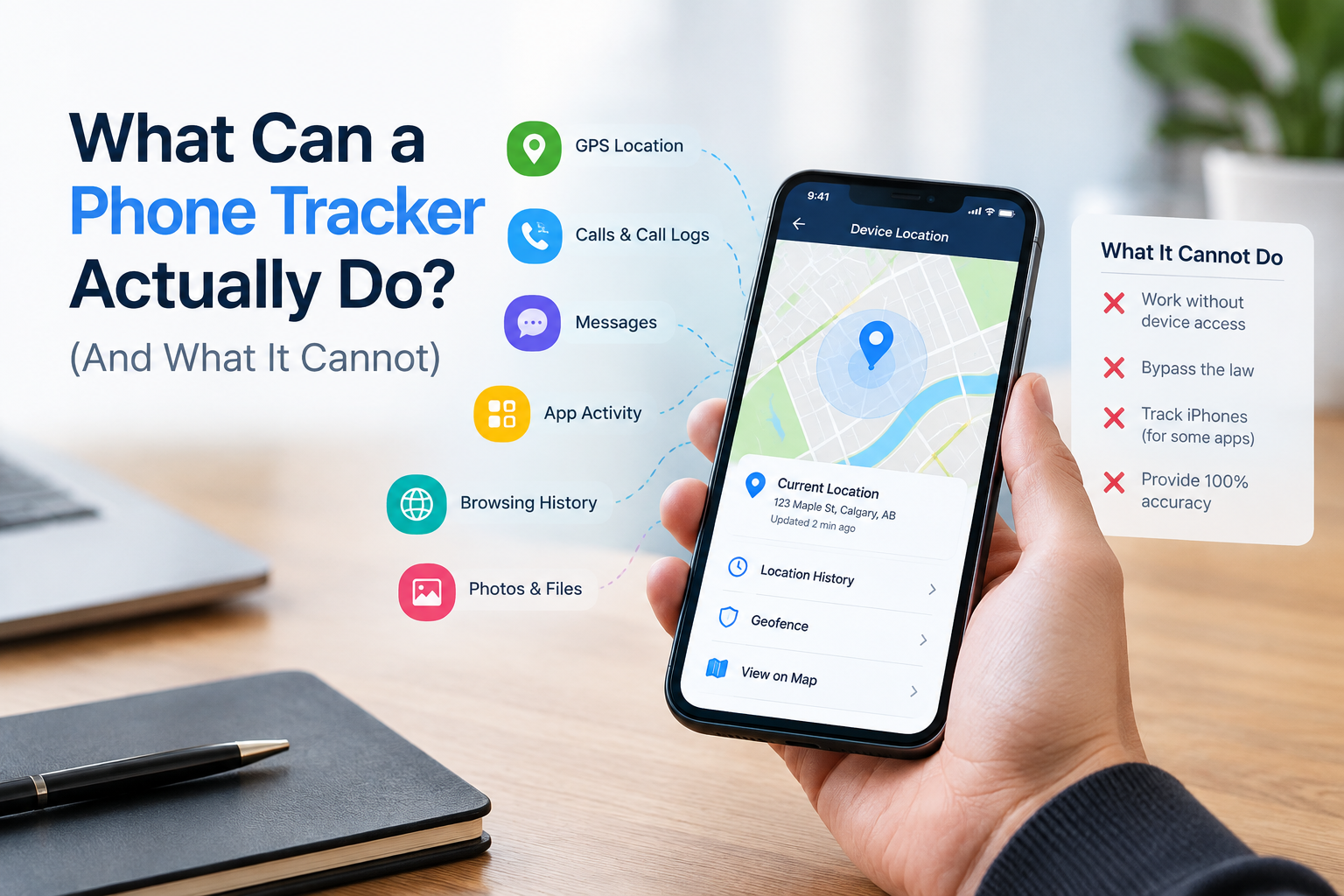
If you’ve searched what can phone tracker do, you’ve probably seen some pretty big promises. Track a phone from a number. See messages remotely. Follow someone’s location in real time. Monitor every app.
Some of those things are possible with the right software and the right device access. Some aren’t.
A real phone tracker is an installed monitoring app that collects information from the device and sends it to a dashboard. Depending on the software, that can include GPS location, calls, messages, app activity, browsing history, and other device data.
The catch is that every tracker has limits. Device compatibility matters. Permissions matter. Internet access matters. So does the law.
That distinction matters if you’re comparing phone tracker features or trying to work out what a monitoring app can actually do before installing one.
What can a phone tracker do?
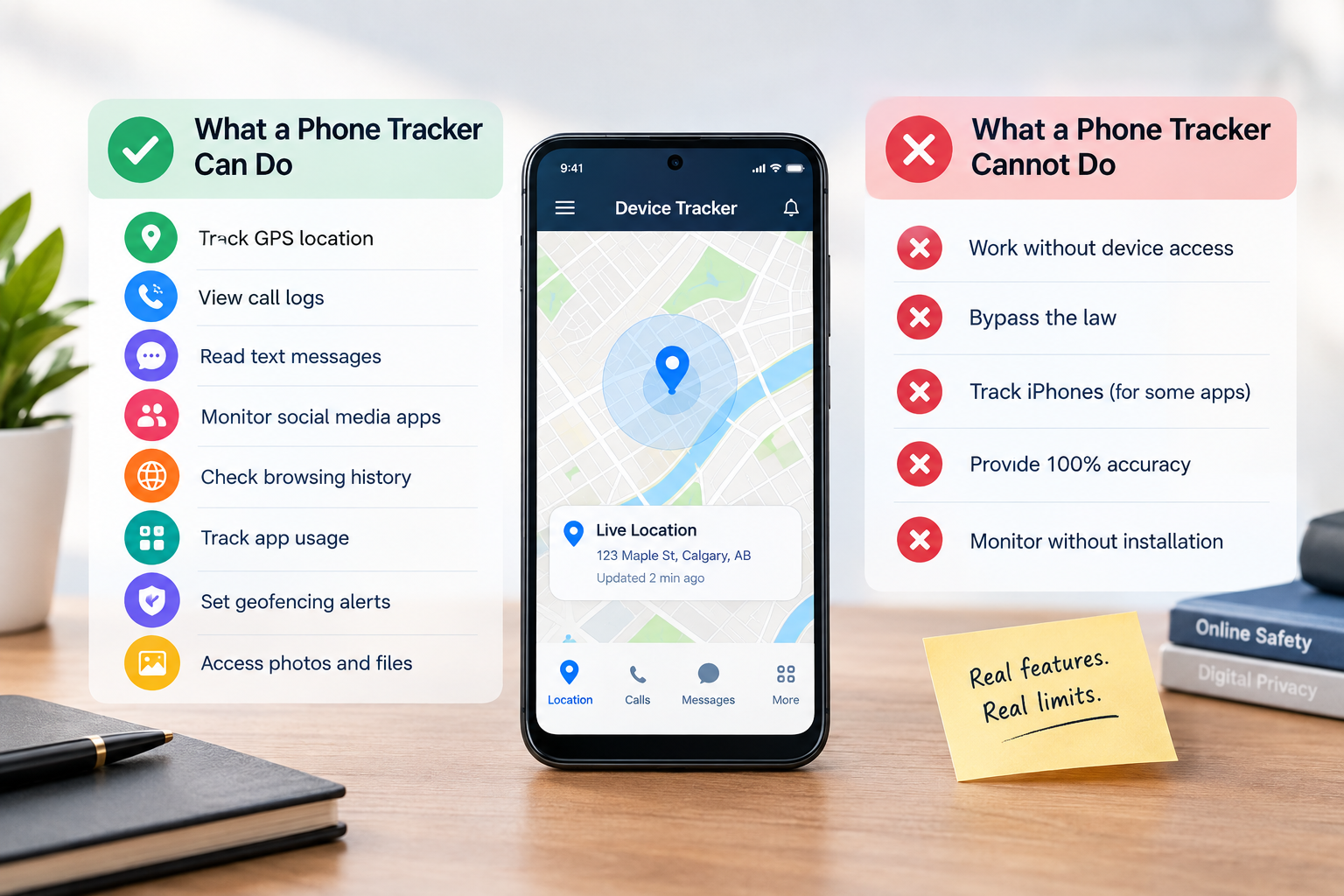
A phone tracker can collect and display different types of activity from a compatible device. The exact phone monitoring capabilities depend on the app, the operating system, the permissions granted and the plan you’re using.
With an Android monitoring app such as SpyHuman, available tools can include:
- GPS location and location history
- Call logs
- Call recording on supported plans
- SMS and text messages
- WhatsApp and other social app activity
- Browser history
- Website blocking
- App usage
- Screen-time information
- Geofencing alerts
- Notifications
- Photos and files
- Remote screenshots
- Other device-management tools
SpyHuman currently lists more than 30 monitoring tools across its plans. Some advanced functions are limited by the device model or Android version.
So when someone asks what a phone tracker can do, the useful answer is, “It depends on what the tracker is installed on and what access it has.”
1. Track a phone’s GPS location
Location tracking is probably the first thing people think about.
A GPS phone tracker can show the device’s current position on a map. Depending on the service, you may also get location history, timestamps, route information, or alerts when the device enters or leaves a defined area.
SpyHuman’s current Android location tracker includes GPS location, location history, and geofence alerts.
This can be useful for parents who want to know whether a child’s phone has reached school or home.
It can also help someone keep track of a company-owned device where monitoring is allowed and the user has been informed.
The important part is how the location data gets there.
A legitimate tracker needs access to the device. GPS information doesn’t magically appear because you know someone’s phone number.
Can a phone tracker work with only a phone number?
This is one of the biggest misconceptions around phone tracking.
A phone number by itself doesn’t give an ordinary monitoring app continuous access to the phone’s GPS, messages, calls, or apps.
Real device monitoring generally requires software installed on the phone.
SpyHuman states that live monitoring requires its Android app to be installed on the monitored device with one-time physical access. Number-only lookup doesn’t provide live tracking, message access or call monitoring.
If a website says you can enter any phone number and instantly see someone’s private messages and live GPS route without access to the phone, be skeptical.
For a deeper explanation, see our guide on how to track location by phone number.
That distinction alone can save you from wasting money on a service that promises something it can’t actually deliver.
What phone monitoring capabilities go beyond GPS?
Location is only one part of phone monitoring.
Modern monitoring apps can collect several types of device activity from a supported Android phone.
Calls and call logs
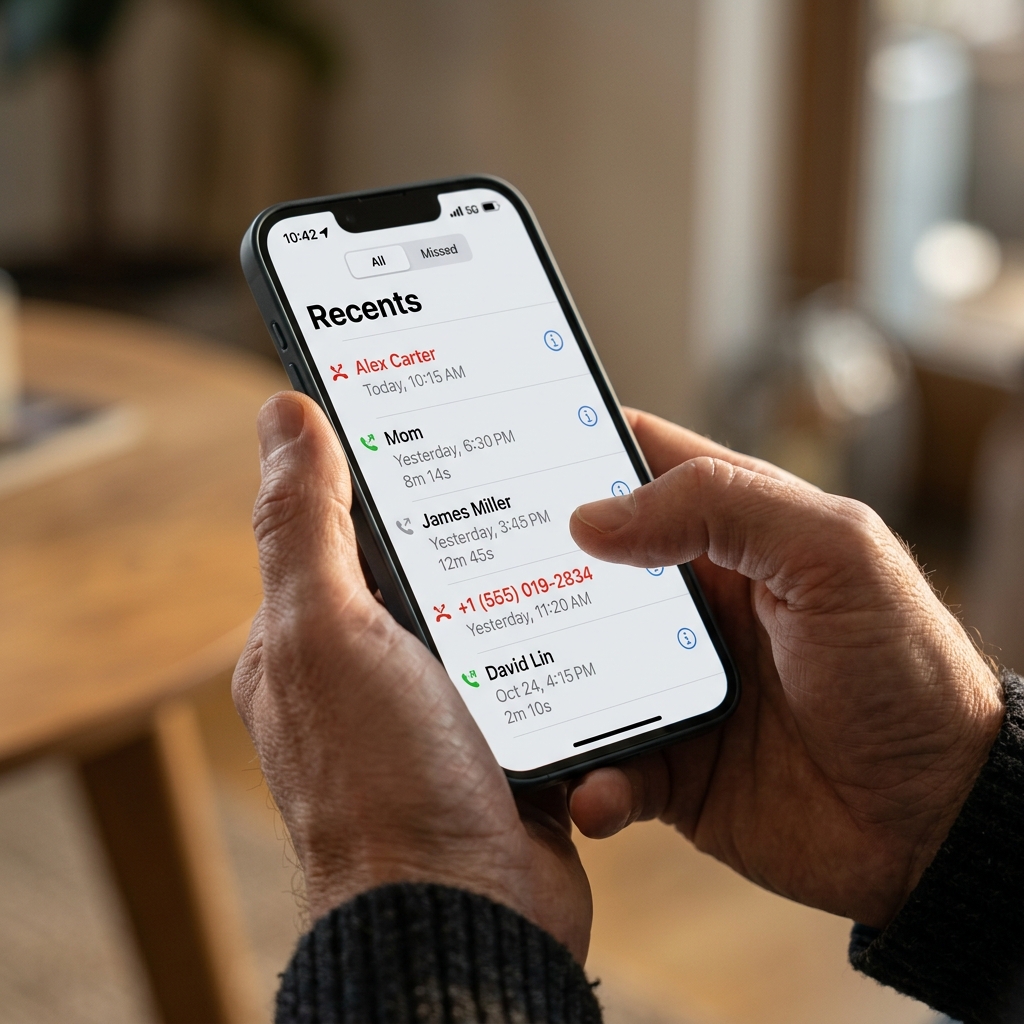
A tracker may record incoming, outgoing, and missed calls along with information such as the contact and time of the call.
Some services also provide call recording.
SpyHuman lists call logs and call recording among its monitoring tools. Call recording is available through its Premium plan.
Whether call recording works exactly as expected can depend on the Android version and phone manufacturer.
And there’s another issue that matters more than the technical side: permission and local law.
Recording another person’s conversation without the required consent can create serious legal problems. The rules vary by jurisdiction.
SMS and text messages
A monitoring app can sometimes collect incoming and outgoing SMS messages from the device.
SpyHuman currently lists SMS monitoring as one of its available tools.
Some plans may also retain records after a message is deleted from the phone. The availability of that type of recovery depends on how the software captures and stores the information.
This is very different from being able to read messages from any phone by typing in its number.
The software needs access to the device where the messages exist.
Social media and messaging apps
Some phone monitoring products go beyond standard SMS.
Depending on the software and Android version, monitoring may include activity from apps such as WhatsApp, Facebook, Instagram, Telegram, or Snapchat.
SpyHuman currently lists WhatsApp monitoring and social media monitoring across 15+ apps among its premium tools.
There can be limitations here.
An app update can change how data is stored or exposed. Android manufacturers can also handle permissions differently.
So don’t assume that a feature listed by a monitoring company will work identically on every Android phone.
Browser history and website activity
Phone monitoring can also include web activity.
A tracker may show websites visited through supported browsers. Some tools also let parents block specific websites or categories of sites.
SpyHuman lists browsing history and website blocking among its monitoring and parental-control tools.
This can be useful when the goal is online safety rather than simply knowing where a device is.
For example, a parent may want to know whether a child is repeatedly accessing inappropriate websites or spending excessive time online.
If that’s your main concern, you may also want to read our guide on how to set up parental controls on an Android phone.
Android’s own controls and Google Family Link can handle some basic restrictions too. You don’t necessarily need a third-party monitoring app for every situation.
Can a phone tracker see everything on a device?
No single phone tracker should be treated as a magic window into everything happening on a phone.
There are technical limits.
Android versions change. Manufacturers change system permissions. Some apps protect their data. Some features require additional permissions. Battery-saving settings can affect background activity.
SpyHuman itself notes that some advanced features can vary by Android model.
A tracker may be able to collect one type of information while having limited access to another.
Think about it like this:
| Activity | Can a tracker potentially access it? | What affects access? |
|---|---|---|
| GPS location | Yes | GPS, permissions, internet |
| Location history | Yes | Tracker settings and plan |
| Call logs | Yes | Android permissions |
| Call recordings | On supported devices | Android version and device |
| SMS | Yes | Permissions and Android version |
| WhatsApp activity | On supported setups | App and Android changes |
| Browser history | Yes, on supported browsers | Browser and permissions |
| App usage | Yes | Android permissions |
| Photos/files | On supported devices | Storage permissions |
| Remote screenshots | On supported setups | Android permissions |
| Live microphone/ambient audio | On supported setups | Device and permissions |
The table gives you the general picture.
The exact answer comes from the tracker and the device you’re actually using.
What are the biggest tracker limitations?
The biggest tracker limitations usually have less to do with marketing and more to do with how phones work.
Device access is required.
For real device monitoring, the app needs to be installed on the monitored phone.
SpyHuman is designed for Android devices and requires one-time access to install the app. It doesn’t provide iPhone monitoring.
That means a tracker isn’t a remote hacking tool.
If you don’t have lawful access to the phone, you can’t simply install the software from a distance and start reading everything.
Android compatibility matters
Android isn’t one identical system across every phone.
Samsung, Xiaomi, Oppo, Vivo, Realme, and other manufacturers make their own changes to the operating system.
Battery management can stop background processes. Permission settings can change. A system update can affect how a monitoring feature works.
That’s why responsible monitoring software should tell you what devices and Android versions it supports.
Internet access affects reporting
The phone needs a way to send collected information to the monitoring dashboard.
If the device is offline, the dashboard can’t receive fresh information in real time.
The data may sync later depending on how the app stores information locally.
So a tracker isn’t a perfect live window into a phone every second of the day.
Some features require paid plans
Free plans often provide only a limited set of records or features.
SpyHuman’s current free plan includes limited recent records, while Premium adds unlimited data viewing, call recording, expanded monitoring, and other advanced tools.
Check the plan details before buying.
A feature appearing somewhere on a company’s website doesn’t necessarily mean it’s included in the free version.
Phone settings can interfere with monitoring
Battery optimization is a common example.
Android phones are designed to restrict background activity to save power. Depending on the device, those restrictions can affect an app that needs to keep working in the background.
Permissions can also be revoked.
If location access is disabled, a location tracker can’t keep receiving the same location information.
Can phone trackers monitor iPhones?
It depends entirely on the product.
SpyHuman currently supports Android devices rather than iPhones or iOS.
That’s an important limitation to check before signing up.
A lot of search results make phone monitoring sound universal. It isn’t.
If the target device is an iPhone, check the monitoring service’s current compatibility page before paying for anything.
Can a tracker monitor a phone without the owner knowing?
Technically, some monitoring software has been designed to hide its presence.
Legally and ethically, that’s a different question.
The Federal Trade Commission has taken action against companies selling stalkerware that secretly monitored people’s location, calls, messages, photos, and online activity.
The FTC describes stalkerware as software installed without the device owner’s knowledge that can give another person access to sensitive activity.
That’s why lawful use matters.
SpyHuman’s current terms and feature material describe intended use around parents or legal guardians monitoring a minor’s device, owners monitoring devices they own, and employers monitoring company-owned devices where the employee has been informed and has consented. Laws vary by location.
If you’re monitoring another adult’s phone, check the law where you live before installing anything.
Don’t assume that having physical access to a phone automatically gives you legal permission to monitor everything on it.
Is phone monitoring legal?
There’s no single worldwide answer.
The law depends on where you live, who owns the device, whose information is being collected, and what you’re recording.
Call recording is a good example.
Some jurisdictions require one-party consent. Others require everyone involved in the conversation to consent.
Location tracking can raise separate privacy issues.
The safest approach is simple: monitor devices you own or have the legal authority to manage and get the required consent when another adult’s private information is involved.
The FTC’s consumer guidance also warns that stalkerware can be used to secretly track someone’s location and private communications.
Trustworthy monitoring starts with knowing where the legal line is.
What should you check before choosing a phone tracker?
Don’t choose a monitoring app based on a giant feature list alone.
Check these things first.
1. Device compatibility
Find out whether the service supports the exact Android version and phone model you’re using.
2. Installation requirements
Ask whether you need physical access to the phone.
If a service claims it can install full monitoring remotely with no access to the device, treat that claim carefully.
3. Actual features
Look for specific details.
Does it provide:
- Live GPS?
- Location history?
- Call logs?
- SMS?
- App activity?
- Browser history?
- Social app monitoring?
- Geofencing?
- Screen-time controls?
Don’t settle for vague language such as “complete phone access.”
4. Free versus paid features
Check exactly what’s included in the free plan.
A free tracker may show only recent records, while advanced history or recording requires a subscription.
5. Privacy and data handling
Read the privacy policy.
SpyHuman’s current privacy policy explains how the company collects, uses, stores and protects information connected with its website, accounts, subscriptions and monitoring software.
That’s worth reading before you give any monitoring service access to sensitive device information.
6. Support and refund terms
Technical problems happen.
Check whether the company provides support and whether there is a refund policy if the software doesn’t work on your compatible device.
SpyHuman currently publishes a 14-day conditional refund for eligible Premium purchases.
Phone tracker vs. phone number lookup
These two terms get mixed together constantly.
A phone tracker monitors a device through installed software.
A phone number lookup works with information associated with the number. It doesn’t automatically give you access to private activity on the phone.
Here’s the practical difference:
| Phone tracker | Phone number lookup | |
|---|---|---|
| Requires app installation | Usually yes | No |
| Live device location | Possible | Generally no |
| Location history | Possible | No |
| Call logs | Possible | No |
| SMS access | Possible | No |
| App activity | Possible | No |
| Browser history | Possible | No |
| Works from number alone | No | Yes for basic lookup information |
| Requires device access | Usually yes | No |
If you’re looking for actual device monitoring, you’re looking for the first category.
If you only need basic information associated with a phone number, that’s a different job.
When is a phone tracker actually useful?
The answer depends on what you’re trying to solve.
For parents, a tracker can help with location safety, app activity, screen time and online activity.
For a company, device monitoring may help manage a company-owned phone when the employee has been properly informed and consent has been obtained.
For a person managing their own device, tracking can help with location history or device activity.
A tracker becomes much less useful when the expectation is something it was never designed to do.
For example, you can’t reasonably expect an Android monitoring app to provide full iPhone access when the product doesn’t support iOS.
You also can’t expect live location from a phone that has the tracking app removed or cannot communicate with the monitoring server.
Knowing those limits before installation saves a lot of frustration.
How much phone monitoring do you actually need?
Start with the problem.
If you’re a parent worried about late-night phone use, screen-time controls may be enough.
If your concern is where your child is after school, GPS location and geofencing may matter more.
If you’re dealing with online safety concerns, app activity, browsing history, and social app monitoring may be relevant.
You don’t need every possible feature just because an app has them.
Our guide on when parents should monitor a child’s phone also covers how monitoring can change as a child gets older. The basic idea is useful: the level of supervision should match the child’s age, maturity, and actual safety concerns.
A quick reality check before you install anything
Before choosing a tracker, ask yourself 5 questions:
- Whose phone am I monitoring?
- Do I have the legal right or required permission to monitor it?
- Does the app support the exact device?
- Does it require physical access for installation?
- Does the feature I need actually exist on my plan?
If you can answer all 5 clearly, you’re already ahead of most people comparing phone trackers.
And if a service can’t explain its limitations, that’s worth paying attention to.
A good monitoring product should tell you where it works, what it can collect, and where the boundaries are.
Frequently asked questions
Can a phone tracker see someone’s exact location?
A compatible GPS tracking app can provide the device’s location when location services, permissions, and the required network connection are available. Accuracy can vary because GPS and network conditions aren’t identical everywhere.
Can I track a phone without installing anything?
For full device monitoring, generally no. Real monitoring requires access to information on the device. SpyHuman requires its app to be installed on the Android phone for live device monitoring.
Can a phone tracker read deleted messages?
Some monitoring products can retain message information captured before deletion. Whether deleted-message recovery works depends on the app, device, and operating system.
SpyHuman lists deleted-log recovery among its premium capabilities.
Does a phone tracker work when the phone is offline?
Fresh information can’t reach a remote dashboard while the device has no connection. Depending on the software, some information may be stored locally and uploaded after the connection returns.
Can I use a phone tracker on an iPhone?
It depends on the tracker. SpyHuman is currently an Android-only monitoring app and doesn’t support iOS.
Is it legal to monitor someone else’s phone?
There isn’t one universal rule. Laws vary by jurisdiction and can depend on ownership, consent, the relationship between the people involved, and the type of information being collected.
For another adult’s private device, check the applicable law and consent requirements before monitoring.
Final thoughts
So, what can a phone tracker do?
A real phone tracker can collect much more than a GPS point. Depending on the product and device, it can provide location information, call logs, messages, app activity, browsing history, social app activity, screen time information, and other device data.
But the limits matter just as much.
You need a compatible device. Installation and permissions matter. Internet access matters. Some tools are restricted to paid plans. And lawful use matters.
That’s the difference between choosing a monitoring product based on a long feature list and choosing one based on what you actually need.
If you want to check exactly what SpyHuman can monitor on a supported Android device, see the real features before you decide.

Leave a Reply