
Someone texts you from an unknown number. Or your kid is late and isn’t picking up. Or you left your phone in a cab and need it back.
Three different situations, three different answers. And that’s the problem with every “track a phone number for free” guide online. They lump everything together and promise one magic tool that does it all. None exists.
Here’s what I’ve learned after testing these tools on real phones in India: the method that works depends entirely on whose phone it is, whether they’ve agreed to share, and what you actually need. This guide covers every real method, in order of what it can genuinely do, and I’ll be straight about what doesn’t work so you don’t waste time on sites that promise impossible things.
The honest starting point
A phone number, by itself, does not give you someone’s live GPS location. Full stop.
Type a number into any of the “trace mobile number” sites, and you’ll get the telecom operator and the circle (the state or region where the SIM was issued). That’s it. The pin they show on the map is the circle’s centre, not the phone’s position. I tested 8 of these sites with my own number and got my registration state every time, while sitting 1,200 km away.
So why does this guide exist? Because there are real, working ways to find a phone’s location, they’re just not the “type a number and see a dot” fantasy. Every method below requires one of three things: you own the device, the person has shared access with you, or you have a monitoring app installed with consent.
Here’s the full picture before we get into the methods.
| Method | Shows live location? | What you need | Cost |
|---|---|---|---|
| Google Find My Device | Yes | Google account signed in on the phone | Free |
| Apple Find My | Yes | Apple ID signed in on the phone | Free |
| Samsung SmartThings Find | Yes | Samsung account on a Galaxy device | Free |
| Google Maps location sharing | Yes | The person shares with you | Free |
| WhatsApp live location | Yes | The person shares inside a chat | Free |
| Family locator apps (Life360, etc.) | Yes | Both people install + agree | Free tier available |
| Carrier/circle lookup | No (just the issuing region) | The phone number | Free |
| Consent-based monitoring (SpyHuman) | Yes (continuous) | Install on child’s/own device | Free plan available |
Notice the pattern. Everything that shows live GPS needs either account access or the person’s cooperation. Everything that needs only a number shows only the SIM’s home region. There’s no in-between, and anyone selling you one is lying.
Method 1: Google Find My Device (your own Android)
This is the first thing to try if you’ve lost your own Android phone or if you manage your child’s device through your Google account.
Go to google.com/android/find on any browser and sign in with the Google account linked to the phone. If the phone is on, connected to data or Wi-Fi, and has location turned on, you’ll see its position on a map within seconds. From that same screen you can ring it at full volume (even if it’s on silent), lock it with a message, or wipe it remotely if you think it’s stolen.
I tested this last month with a Redmi Note 12 on Jio. The location was accurate to about 15 metres indoors, and the ring cut through a silent profile, which is what you want when your phone is between couch cushions.
What it can’t do: show someone else’s phone. Find My Device only works with a Google account you control. That’s a security feature, not a limitation.
Google recently rebranded this as Find Hub and added the ability to locate offline devices through a crowdsourced Bluetooth network, similar to Apple’s AirTag system. If your phone is newer (2021 onward with the right chipset), it can be found even when turned off. Worth checking if your device supports it.
Method 2: Apple Find My (your own iPhone)
The Apple equivalent. Go to icloud.com/find on a browser or open the Find My app on another Apple device. Sign in with the Apple ID linked to the phone.
Same rules: the phone needs to be on and connected, with Find My enabled in settings. You get its location on a map, and you can play a sound, mark it as lost, or erase it.
Apple’s Find My network uses other Apple devices nearby to relay the location of an offline iPhone, AirPods, or AirTag. This works even when the phone’s battery has run out (on iPhone 15 and later, for a limited time). If you’ve paired an AirTag with your keys or bag, the same system tracks those too.
This matters for India because iPhone usage is growing fast, and a lot of parents buy their kids a hand-me-down iPhone. If you’re in that situation, enabling Find My before handing the phone over is the single most useful thing you can do.
Method 3: Samsung SmartThings Find
Samsung’s version, specifically for Galaxy phones, tablets, earbuds, and watches. Open smartthingsfind.samsung.com or the SmartThings app and sign in with the Samsung account on the device.
It works like Find My Device, plus Samsung’s Galaxy Find Network uses other Galaxy phones to find offline devices. If you have a Galaxy SmartTag, it tracks bags, wallets, and keys the same way.
In India, Samsung has the largest Android market share, so this is relevant for a lot of people. If your family uses Galaxy phones, SmartThings Find is already built in and just needs to be turned on.
Method 4: Google Maps location sharing
This is the easiest way to see a family member’s live position, and it works across Android and iPhone.
The other person opens Google Maps, taps their profile icon, goes to Location sharing, and picks your contact. You’ll see a live dot on your own Google Maps for as long as they keep sharing. They can stop at any time.
What makes this useful: it’s two-way, voluntary, and visible. The person sharing can see that they’re sharing, and they control the duration. For parents and kids, or couples who want to know each other’s commute status, it’s the cleanest option because nobody is being tracked without knowing it.
I use this with my family. It takes 30 seconds to set up, and the live dot updates every few seconds on a good connection. On a slow 4G connection in a rural area I tested, updates came roughly every 15 to 20 seconds, which is still fine for knowing someone’s general location.
Method 5: WhatsApp live location
Open a chat, tap the attachment icon, select Location, and choose “Share live location.” Pick a duration (15 minutes, 1 hour, or 8 hours). The other person sees your moving position on a map inside the chat.
This is practical for short-term, specific situations. Your kid is walking home from tuition and you want to watch the route. A friend is coming to meet you and you both share so you can see when they’re close. A delivery is happening and you need to confirm where the driver is.
It’s built into an app most Indians already have. No extra download, no account signup. The limit is that it’s temporary and chat-based, so it’s not a background monitoring solution. For ongoing location awareness, Google Maps sharing or a family app is better.
Method 6: family locator apps
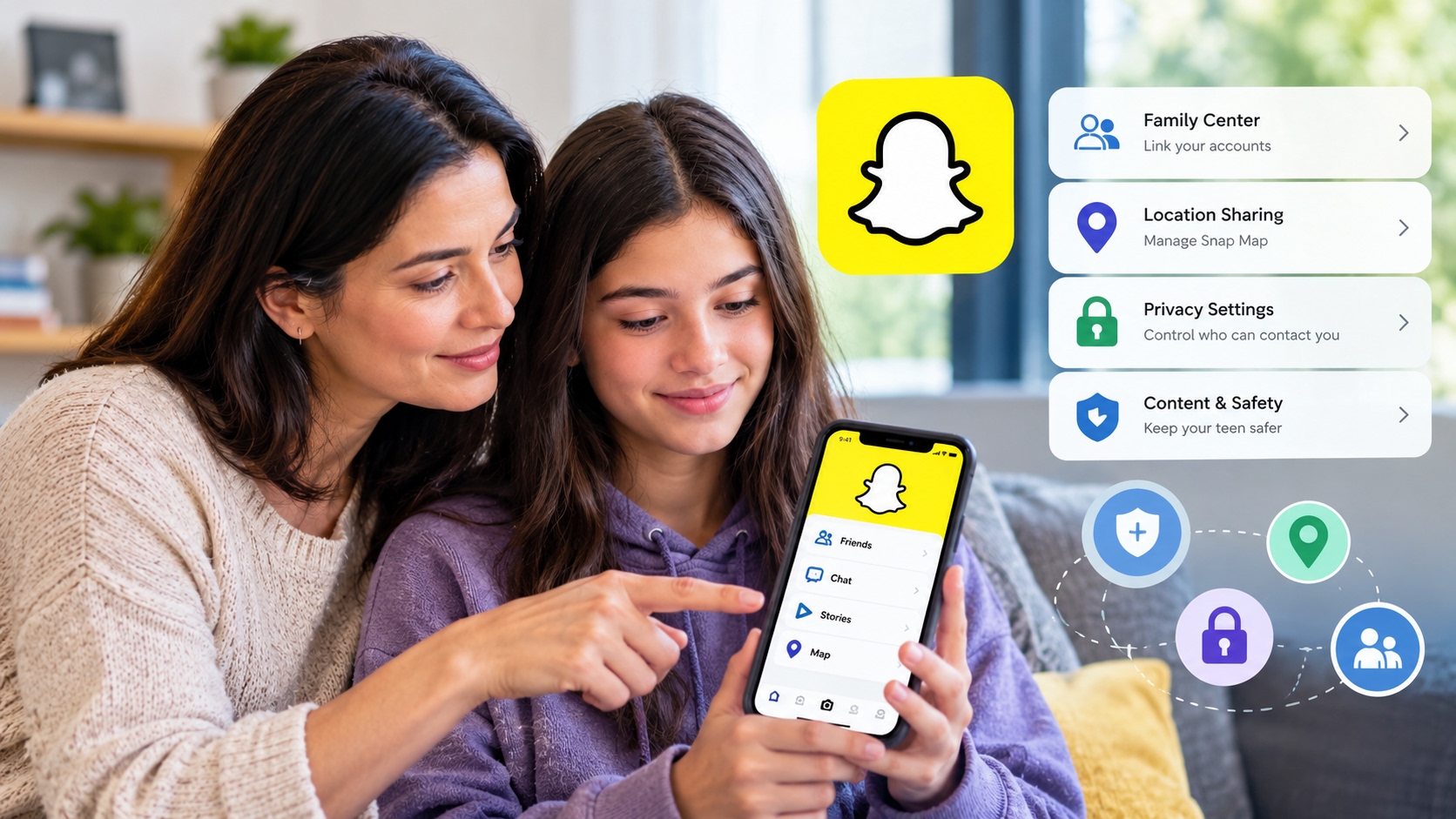
Apps like Life360, Family360, and Google Family Link are built for families who want to see each other’s locations continuously. Everyone installs the app, joins a shared circle, and each person’s location shows on a shared map.
Google Family Link deserves a specific mention for Indian parents. It’s free, built into every Android phone, and it does more than location. You can manage screen time, approve app downloads, and see activity reports. If your child is on Android, this is probably the first parental tool to set up before anything else.
The catch with all family apps: they work only when everyone has installed the app and agreed to share. A kid who turns off location or uninstalls the app goes invisible. That’s by design (it’s their device, even if you bought it), but it’s worth knowing.
Method 7: carrier and telecom circle lookup
This is the “type a number and see a location” method, and it’s the one most misunderstood.
Enter a 10-digit Indian mobile number on a lookup site and you’ll get the operator (Jio, Airtel, Vi, BSNL) and the telecom circle (the state or region where the SIM was issued). That’s genuinely useful for screening unknown calls. A “Delhi” circle on a number claiming to be your Chennai bank is a red flag.
What it doesn’t give you: the phone’s current position. The circle is where the number was born, not where it lives now, and mobile number portability (available since 2011) means many numbers have moved operator and city since they were issued.
I’ve written the full detail on how this works, all 22 circles and the portability caveat, in track a mobile number by state and telecom circle. Read that before you trust a “located in Rajasthan” result at face value.
Method 8: consent-based monitoring apps
If you’re a parent who needs continuous background tracking of a child’s device, a monitoring app is the tool designed for that job. You install it once on the phone (with the child’s knowledge, or at least on a device you own), and it reports location, app usage, calls, and messages to a dashboard you check from anywhere.
SpyHuman’s phone number tracker works this way. Register a free account, install on the Android device, grant the permissions, and the dashboard shows live GPS location along with other monitoring data. Setup takes about 5 minutes.
Two things to be clear about. First, this requires physical access to the device and a one-time install. There is no way to monitor a phone by just entering its number. Any app or site claiming otherwise is lying. Second, this is lawful only on a device you own or your minor child’s device. Installing it on another adult’s phone without their consent is illegal in most jurisdictions, and SpyHuman’s Lawful Use Policy explicitly prohibits it.
The reason I’m being blunt about the limits: this niche is full of covert “spy on anyone” promises that get people in legal trouble and get sites penalised by Google. The honest version (parental monitoring, own-device, with consent) is the one that actually works long-term for everyone involved.
What about IMEI tracking?
Every phone has an IMEI (International Mobile Equipment Identity), a unique 15-digit number. You can find yours by dialling *#06#. If your phone is stolen, you can file a police complaint with the IMEI, and law enforcement can ask operators to trace or block it.
Two things worth knowing. First, only the police and telecom operators can actually trace an IMEI to a live location. No consumer website does it. If a site asks you to enter an IMEI and promises a location, it’s a scam. Second, file the complaint fast, because a stolen phone’s IMEI can be changed (illegally) if it reaches a grey market.
India’s Sanchar Saathi portal lets you check the status of a device by IMEI and block a stolen phone across all networks. Keep your IMEI written down somewhere safe so you have it if the phone goes missing.
The methods that don’t actually work
Some things you’ll see recommended everywhere that either don’t work or work so poorly they’re not worth your time.
SS7 tracking and cell-tower triangulation. These are real techniques used by telecom operators and law enforcement, not by consumers. You cannot access them from a website. Any tool claiming to use cell-tower triangulation on a number you type in is faking the result.
“Type a number and see live location” sites. I tested Scannero, GeoFinder, and three others. Every one asked for a number, then either showed the telecom circle dressed up as GPS, or asked me to send an SMS link to the target phone (which is just location-sharing with extra steps and a fee). None delivered what the landing page promised.
Free “spy apps” that promise invisible tracking without install. They don’t exist. A phone’s operating system doesn’t allow an app to track it without being installed on it. If you see this promise, it’s either a scam for your payment details or malware for your own phone.
How accurate is phone GPS tracking?
On a modern smartphone with GPS, Wi-Fi, and cell data working together, you can expect accuracy within 3 to 10 metres outdoors. Indoors it widens to 15 to 30 metres, depending on the building and signal strength.
In Indian conditions specifically, a few things affect accuracy. Dense urban areas like old Delhi or Dharavi can bounce GPS signals off buildings and throw off the reading by 20 to 50 metres. Rural areas with fewer cell towers rely more on GPS alone, which is usually fine outdoors but can lag indoors. And older budget phones with weaker GPS chips are less accurate than recent mid-range devices.
If you see a dot on a map, treat it as “the phone is roughly here,” not “the person is standing on this exact tile.” That’s accurate enough for finding a lost device or checking your kid reached school, which are the real use cases.
Is tracking a phone number legal in India?
Short version: tracking your own device or your minor child’s device is legal. Tracking another adult’s phone without their consent is not.
India’s Digital Personal Data Protection Act treats location as personal data. Collecting it without consent or a lawful basis violates the act. The Information Technology Act and the Indian Telegraph Act add further restrictions on intercepting communications and tracking devices.
As a parent, you are generally entitled to monitor your minor child’s device for their safety. As an employer, you can monitor company-owned devices with prior written disclosure to the employee. As a private individual tracking another adult’s phone in secret, you are breaking the law.
I’ve covered the full picture, including how the rules differ between India, the US, and the EU, in is it legal to track a phone number. Read it before you install anything on someone else’s device. And SpyHuman’s Lawful Use Policy spells out the exact boundaries.
Which method should you use?
Match your situation to the answer.
| Your situation | Best method |
|---|---|
| Lost your own Android phone | Google Find My Device |
| Lost your own iPhone | Apple Find My |
| Want to see your family’s locations daily | Google Maps sharing or Family Link |
| Kid walking home, short-term check | WhatsApp live location |
| Continuous parental monitoring | Family Link + consent-based app |
| Unknown number called you | Carrier/circle lookup + caller ID |
| Phone stolen | File FIR with IMEI + Sanchar Saathi block |
If your situation doesn’t fit any of these, ask yourself one question: does the person know I’m looking for their location? If the answer is no, what you’re trying to do is probably illegal and definitely outside what any legitimate tool should help with.
Identify the caller without tracking them
Sometimes you don’t need a location at all. You just need to know who called. That’s a different problem with a simpler answer: caller ID, reverse lookup, and the official CNAP system India is rolling out. I covered all of that in how to identify an unknown number.
Frequently asked questions
Can I track any phone number for free? You can find the telecom circle and operator of any Indian number for free. Live GPS location requires device access, a shared connection, or an installed app. No website gives you live location from just a number.
What’s the most accurate free method? Google Find My Device and Apple Find My, on your own device or one you manage. They use GPS, Wi-Fi, and cell data together and are accurate to a few metres.
Can I track a phone that’s switched off? Newer phones (iPhone 15+, recent Androids with the right chipset) can be found through Bluetooth-based networks even when powered down. Older phones can only show their last known location before they went offline.
Is there a way to track without installing anything? Only if the person voluntarily shares their location with you through Google Maps, WhatsApp, or a family app. There is no way to track a phone remotely by just knowing its number.
Can a phone be tracked by IMEI? Only by law enforcement through the telecom operator. No consumer tool tracks a phone by IMEI. Keep your IMEI noted and file a police complaint fast if your phone is stolen.
How do I know if someone is tracking my phone? Check for unfamiliar apps, unusual battery drain, and unexpected data usage. Android and iOS both show which apps have location permissions in Settings. I’ve written a full guide on spotting and stopping unwanted tracking [link to future spoke: Am I Being Tracked].
Is it illegal to track my child’s phone? Generally no, if you are the parent or legal guardian of a minor. But laws vary by age and region, so check what applies where you live. Our Lawful Use Policy has the detail.

Leave a Reply