

“WhatsApp chat history of any number” is one of the most searched phrases in this space. Over a thousand people a month land on this page looking for a way to type a phone number and read someone else’s WhatsApp messages. I understand the appeal, especially for a parent worried about a child, but the honest answer isn’t what most sites tell you.
Here’s the truth, followed by what you can actually do if reading WhatsApp messages matters to you for a legitimate reason.
Can you see the WhatsApp chat history of any number?
You cannot see someone’s WhatsApp chat history by entering their phone number into any website, tool, or app. This capability does not exist for consumers, and it never has.
WhatsApp uses end-to-end encryption. Messages are encrypted on the sender’s device and decrypted only on the receiver’s device. Nobody in between, not WhatsApp, not your internet provider, not a third-party tool, can read the content. A phone number is a routing label for calls and messages, not a key to someone’s inbox.
So when a site says, “Enter any number, see their chats,” what’s actually happening? Let me walk through the common tricks.
What “WhatsApp chat history” sites actually do
I’ve tested over a dozen of these in 2026. They fall into four patterns.
The fake-scan sites. You enter a number, a progress bar spins for 30 seconds (sometimes with a fake “connecting to WhatsApp servers” animation), and then it asks you to complete a “human verification” survey or download an app. The survey earns the site owner affiliate money. You never see any messages. The whole thing is a lead-generation funnel dressed up as a hacking tool.
The SMS-link services. You enter the target’s number, and the service sends them an SMS or WhatsApp message with a link. If the person taps the link and grants location permission, you get their location (not their messages). This is just location-sharing sold as chat monitoring, at a premium price, for something Google Maps does for free.
The WhatsApp Web exploit claim. Some sites say, “Scan their QR code once and you’ll have permanent access to their chats.” This refers to WhatsApp’s Linked Devices feature. It does work in the sense that linking a device gives you message access, but it requires physical access to the unlocked phone, it shows up in the target’s Linked Devices list, and WhatsApp now sends periodic notifications about linked devices. Doing this without the person’s knowledge is both impractical and illegal.
The malware route. Some sites offer APK downloads that claim to be WhatsApp “crackers” or “sniffers.” These are malware. They don’t read anyone’s WhatsApp. They infect your own phone, steal your data, and sometimes hijack your own WhatsApp account by capturing your verification code. I cannot stress this enough: do not download APKs from sites promising to read someone’s WhatsApp.
Why encryption makes remote reading impossible
This isn’t a limitation that can be fixed with a better tool. It’s how the technology works at a fundamental level.
When you send a WhatsApp message, your phone generates a unique encryption key for that conversation. The message is scrambled on your device before it leaves, travels through WhatsApp’s servers as gibberish, and is unscrambled only on the recipient’s device using their matching key. WhatsApp’s servers never hold the readable version.
Even WhatsApp itself cannot read your messages. This is why governments around the world have been pressuring Meta to build a “backdoor” for law enforcement, and Meta has refused. If WhatsApp’s own engineers can’t read the messages, a random website certainly can’t.
The only place messages exist in readable form is on the two devices at each end of the conversation. Which is why every real monitoring method requires access to one of those devices.
What actually works (honest options)
If your concern is legitimate, the real methods are below, and they all require device access or cooperation.
For parents monitoring a minor child
Install a monitoring app on the child’s device. SpyHuman’s WhatsApp tracker reads messages after they’re decrypted on the device, because it’s installed on that device with the necessary permissions. It reports messages, call logs, contacts, and media to a parent dashboard. This works because the app is on the endpoint, not trying to intercept traffic.
The child should know the app is there. Open monitoring is both legally safer and more effective as a parenting tool. See how to monitor your child’s WhatsApp safely for the full approach.
For children under 13, WhatsApp’s own parent-managed accounts (launched March 2026) let you control who contacts your child and which groups they join, though they don’t let you read messages. See the WhatsApp parental controls guide for setup.
Checking your own WhatsApp history
If you want to see your own chat history on another device, WhatsApp’s export feature lets you email an entire conversation as a text file. Open the chat, tap the three-dot menu, choose More, Export Chat, and choose whether to include media. You can also access your own backup through Google Drive (Android) or iCloud (iPhone).
Recovering deleted messages on your own phone
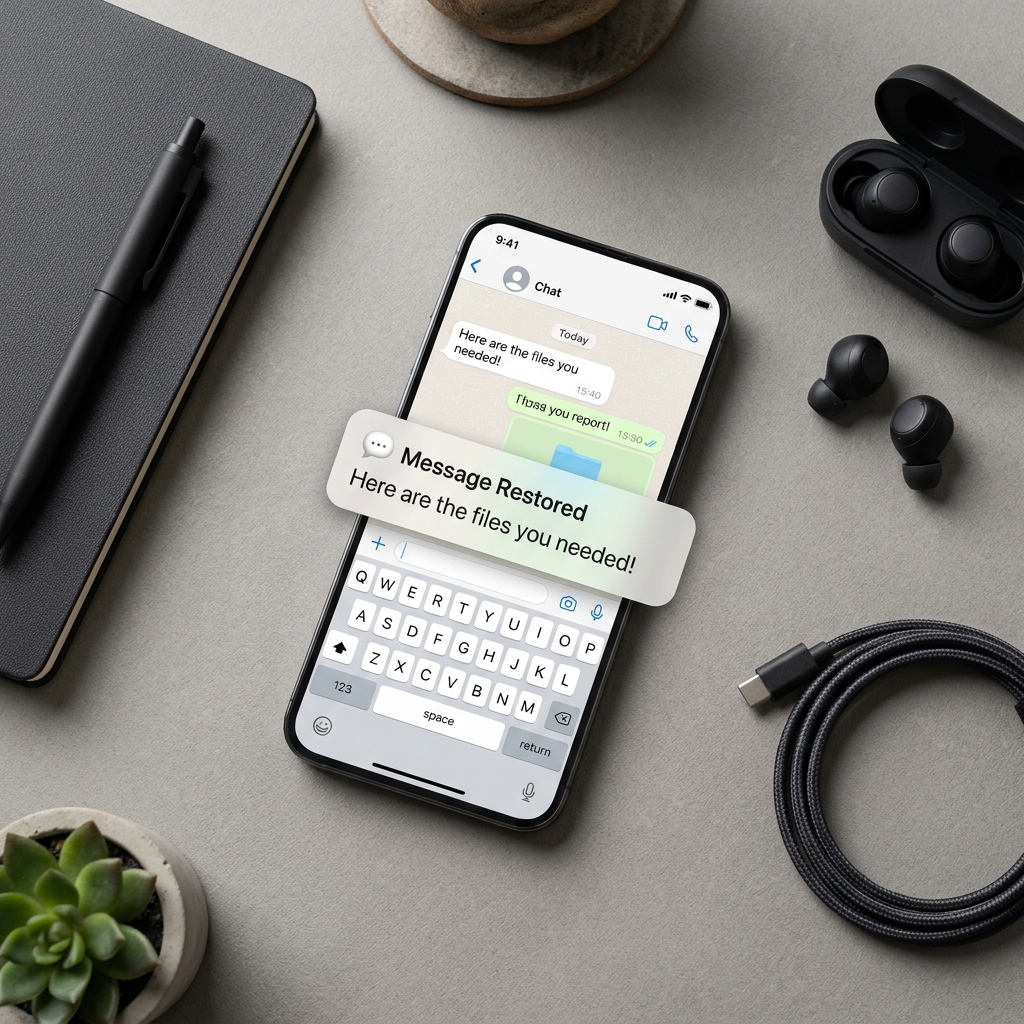
If you deleted messages and want them back, restoring from a Google Drive or iCloud backup is the standard route, but it replaces your current chats with the backup version. There are also notification-log recovery apps on Android that can pull the text of notifications that arrived before deletion, though they only capture the preview text, not full messages.
For the full walkthrough, see how to see deleted WhatsApp messages.
The privacy and legal line
Wanting to read someone’s WhatsApp is understandable in some situations. But the law draws a clear line.
Reading a minor child’s messages on a device you manage is generally lawful under parental authority. Reading another adult’s messages without their consent is illegal in India under the IT Act (unauthorized access to a computer resource) and the DPDP Act (processing personal data without lawful basis). It’s similarly illegal in the US, the EU, and most other jurisdictions.
This isn’t about technology being frustrating. It’s about privacy being a right. The same encryption that stops a parent from casually checking a child’s messages also stops an abusive partner from reading a victim’s conversations, and that protection matters.
If your concern is a child’s safety, use the lawful tools designed for it. If your concern is a partner’s behavior, the answer is a conversation or a counsellor, not a phone hack. SpyHuman’s Lawful Use Policy prohibits covert monitoring of adults, and so does the law.
For the full legal picture, see is it legal to track a phone.
How to protect your own chat history
If you’re on the other side of this question and want to make sure nobody reads your WhatsApp without permission, a few steps close the main gaps.
Check linked devices regularly: open WhatsApp, tap the three-dot menu, linked devices, and remove anything you don’t recognize. This is the most common way someone gets ongoing access.
Enable App Lock: Go to Settings, Privacy, and App Lock, and set a fingerprint or face scan. This prevents someone who borrows your phone from opening WhatsApp.
Enable two-step verification: Go to Settings, Account, and Two-step verification, and set a PIN. This stops someone from registering your number on another device without the PIN.
Don’t share your verification code: If you receive an SMS code you didn’t request, someone is trying to register your number on their device. Never forward this code to anyone, even if they claim to be from WhatsApp.
Turn on encrypted backups: Go to Settings, Chats, Chat Backup, and End-to-End Encrypted Backup, and set a password. This protects your Google Drive or iCloud backup from being accessed with just your account credentials.
If you suspect someone has installed monitoring software on your phone, see, am I being tracked? How to check and stop it.
What about WhatsApp backup forensics?
WhatsApp backs up chats to Google Drive (Android) or iCloud (iPhone). These backups are stored in the cloud, and someone with access to the linked Google or Apple account could, in theory, restore the backup onto another device and read the messages.
This is a real risk, but it’s an account-security issue, not a WhatsApp vulnerability. The fix is simple: enable end-to-end encrypted backups (Settings, Chats, Chat Backup, End-to-End Encrypted Backup). Once enabled, the backup itself is encrypted with a password only you know, so even someone with your Google account credentials can’t read it.
For parents managing a child’s Google account (through Family Link), backup access is technically available, but restoring a child’s backup onto a separate phone is a clumsy process compared to using an on-device monitoring app. The monitoring app shows messages in real time, searchable and timestamped, without having to restore anything.
Social engineering attacks on WhatsApp
The most common way someone actually gains access to another person’s WhatsApp isn’t through a tool at all. It’s through social engineering: tricking the person into handing over access.
The verification-code trick is the most widespread. Someone messages you (often pretending to be a friend whose account was compromised) saying, “I accidentally sent my verification code to your number, can you forward it?” That code is actually your own WhatsApp registration code. Forward it, and they take over your account.
SIM-swap attacks are rarer but more dangerous. An attacker convinces your carrier to transfer your number to their SIM, receives your verification code on their phone, and registers your WhatsApp on their device. This gives them full access to your account, including new messages.
Both attacks bypass encryption entirely because they don’t intercept messages. They take over the account. The defenses are two-step verification (a PIN that’s needed in addition to the SMS code) and never sharing any code with anyone.
Frequently asked questions
Can I see someone’s WhatsApp messages by their number?
No. End-to-end encryption prevents this. You need access to one of the two devices in the conversation.
Are “WhatsApp chat history viewer” sites safe?
No. They are scams, ad farms, or malware distributors. Do not enter your number or download anything from them.
Can WhatsApp itself read my messages?
No. End-to-end encryption means even WhatsApp’s servers never hold the readable version of your messages.
What’s the safest way to monitor my child’s WhatsApp?
A parent-managed account (for under-13s) for contact control, plus a monitoring app installed openly on the device for message visibility. See the full guide.
Can police read WhatsApp messages?
They can request data from Meta, but due to encryption, Meta can only provide metadata (who messaged whom, when), not message content. They can access messages by examining a seized device directly.
Someone sent me a link claiming to show my WhatsApp history. Is it real?
No. It’s a phishing attempt. Do not tap it. Block and report the sender.
Leave a Reply