
“WhatsApp last seen tracker” is one of the most searched terms in the WhatsApp monitoring space. People want to know when someone was last on WhatsApp, whether they are online right now, and whether there is a way to track that activity without the other person knowing.
Here is the honest answer: WhatsApp’s privacy controls significantly limit what you can see about another person’s Last Seen and Online status. Third-party tracker apps cannot magically reveal information that WhatsApp does not make available to them.
If you have a legitimate reason to understand someone’s WhatsApp activity, there are more reliable and transparent options, particularly for parents managing a child’s device.
What “Last Seen” and “Online” Mean
Last Seen tells you when a person last used WhatsApp. Depending on their privacy settings, you may see a time such as “last seen today at 14:32.”
Online means that the person currently has WhatsApp open on their device and is connected to the internet. Importantly, seeing someone as online does not necessarily mean they have read your message.
Both indicators are controlled by WhatsApp’s privacy settings, which is where most Last Seen tracker claims become complicated.
WhatsApp’s Privacy Changes: Why Most Trackers Have Limited Access
WhatsApp gives users control over who can see their Last Seen and Online information.
Depending on the setting and WhatsApp version, users can choose options such as:
- Everyone
- My contacts
- My contacts except…
- Nobody
WhatsApp also applies an important reciprocity rule: if you do not share your own Last Seen or Online information, you cannot see other people’s Last Seen or Online information.
That means a tracker cannot simply bypass the privacy setting through WhatsApp’s normal interface.
There are also legitimate reasons you may not be able to see someone’s status even when they have not intentionally hidden it. For example, you may not have chatted with them before, they may not have saved you as a contact, you may have been blocked, or there may be a temporary connection issue.
The result is simple: there is no reliable universal method for recovering another person’s hidden Last Seen or Online status through WhatsApp itself.
This is why many websites and apps marketed as “WhatsApp Last Seen trackers” provide much less information than their advertising suggests.
The “Last Seen Tracker” Websites and Apps
There are two broad categories of tools marketed for this purpose: web-based trackers and mobile apps.
Web-Based WhatsApp Last Seen Trackers
Many websites ask you to enter a phone number and promise to show the person’s Last Seen or Online status.
The problem is that these services are limited by the information WhatsApp makes available.
If a person’s Last Seen is visible to you, a website may be able to display information that is already publicly available to your WhatsApp account. But if the person’s privacy settings prevent you from seeing that information, a legitimate service cannot simply manufacture the missing timestamp.
Be especially cautious with websites that promise guaranteed tracking, claim they can bypass WhatsApp privacy settings, or request your WhatsApp verification code.
A service asking for your WhatsApp verification code is a major security warning. Never give an authentication code to a third party simply because it claims to be a WhatsApp tracker.
WhatsApp Online Tracker Apps
Some apps claim to monitor when a WhatsApp contact comes online and create a history of those sessions.
Where such an app has access to a visible status indicator, it may attempt to record changes over time. But that does not mean it can see hidden information.
If WhatsApp does not expose the person’s Last Seen or Online status to your account, a legitimate third-party app should not be expected to recover it.
Claims that an app can reliably bypass WhatsApp’s privacy controls should therefore be treated with skepticism.
Some tracker apps may also produce inaccurate or incomplete information. Online indicators can be brief, privacy settings can change, and technical limitations can cause missed events.
Why People Search for a WhatsApp Last Seen Tracker
Search intent around WhatsApp tracking generally falls into several different categories, and each has a different practical answer.
Parents Concerned About a Child’s Screen Time
A parent may want to know whether their child is using WhatsApp late at night instead of sleeping or studying.
In this situation, a Last Seen tracker is usually not the best solution.
A child can change WhatsApp privacy settings, and Last Seen only tells you limited information about WhatsApp activity. Device-level parental controls can provide more useful information about overall app usage.
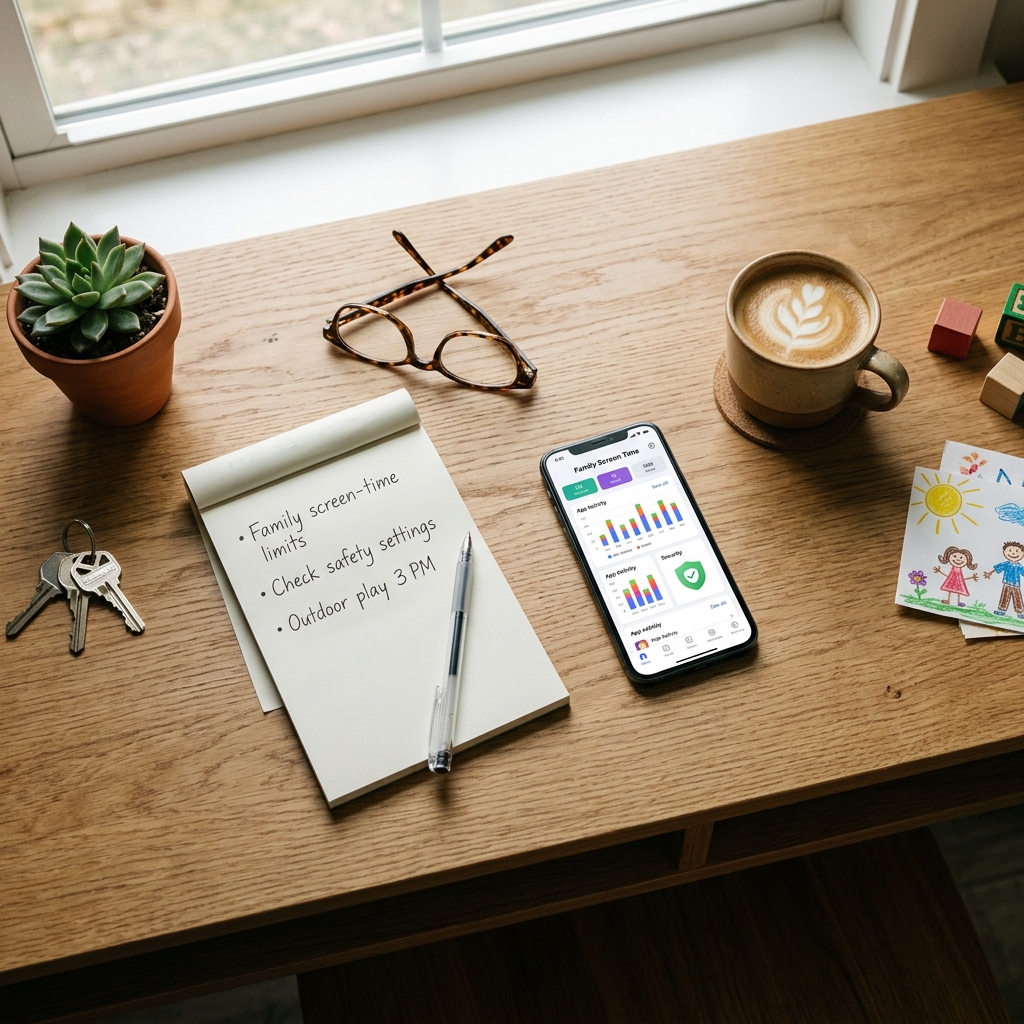
Google Family Link on supported Android devices and Apple Screen Time on iPhones can provide device-level usage information and allow parents to establish limits or downtime.
Partners Checking Each Other’s WhatsApp Activity
Another common reason people search for Last Seen trackers is to determine whether a partner was active on WhatsApp at a particular time.
WhatsApp’s privacy controls are designed to give people control over this information. Attempting to secretly monitor another adult’s activity can also create privacy, consent, and legal concerns depending on the circumstances and jurisdiction.
If trust or communication is the underlying issue, a Last Seen tracker cannot resolve that problem.
People Who Are Simply Curious
Some people simply want to know when a contact is using WhatsApp.
WhatsApp has progressively given users more control over whether this information is visible. If a contact chooses not to share their Last Seen or Online information, you may simply not be able to see it.
What Actually Works for Legitimate Use
If your concern is a child’s screen time, sleep, or general device usage, use transparent device-level parental controls where appropriate.
Google Family Link can provide information about app usage on supported Android devices and can help parents manage screen-time limits and bedtime schedules.
Apple Screen Time provides similar app-usage and downtime controls on supported Apple devices.
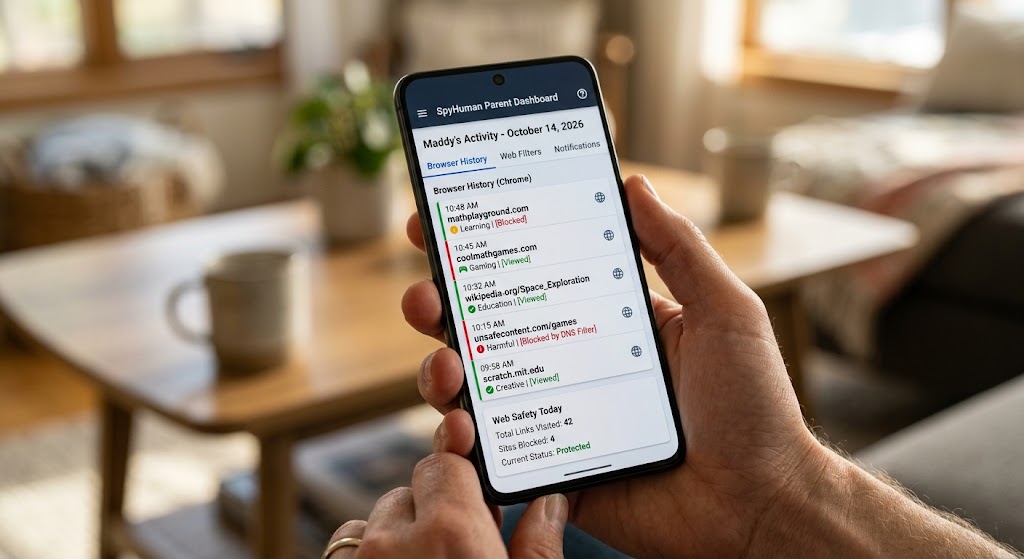
A monitoring solution such as SpyHuman’s WhatsApp tracker may provide additional activity information through a parent dashboard, depending on the device, operating system, permissions, and product capabilities.
The important distinction is that these approaches should be used for legitimate, authorized monitoring rather than as a way to secretly bypass another person’s WhatsApp privacy settings.
For adults, if you need to know whether someone is available, the simplest option is usually to ask them.
Can Someone Track Your Last Seen?
If you are on the other side of the question and are worried about someone monitoring when you are active on WhatsApp, there are several privacy steps you can take.
Open WhatsApp and go to:
Settings → Privacy → Last seen and online
From there, choose the privacy settings that match the level of visibility you want.
If you do not share your Last Seen or Online information, WhatsApp says you also will not be able to see other users’ Last Seen or Online information.
Review Your Linked Devices
You should also regularly check WhatsApp’s Linked Devices section.
If you see a computer or other device that you do not recognize, remove it and review your account security settings.
For additional account protection, WhatsApp provides security features such as two-step verification, passkeys, app lock, and other account-security controls.
If you suspect that monitoring goes beyond WhatsApp itself, such as an unwanted tracking or monitoring application installed on your phone, see, am I being tracked? How to check and stop it.
WhatsApp Privacy and Parental Controls in 2026
WhatsApp’s approach to privacy and parental controls continues to evolve.
Rather than treating every new feature as universally available, it is important to distinguish between features that are fully available and features that WhatsApp is still rolling out.
WhatsApp currently documents both parent-managed accounts for younger children and optional parental controls for teens.
Parent-managed accounts are intended for children under 13 or older where the minimum age is higher in a particular country or region. These accounts are designed around messaging and calling with parental supervision.
WhatsApp also has optional parental controls for teens aged 13–17. These require the parent or guardian and teen to link their accounts, and availability is being rolled out gradually.
For teens using parental controls, parents can manage certain privacy settings and some aspects of the teen’s WhatsApp experience. However, WhatsApp says that end-to-end encryption continues to protect personal messages and calls: parents cannot simply read the contents of their teen’s private chats through these controls.
Because these features are being rolled out gradually, availability and exact settings can vary by region and WhatsApp version.
The broader trend is clear: WhatsApp is giving users and families more granular control over privacy and account use rather than providing a universal mechanism for secretly tracking another person’s activity.
Blue Ticks, Grey Ticks, and What They Tell You
While discussing WhatsApp activity, it is also worth understanding the check marks that appear beside messages.
One Grey Tick
One grey check mark means the message was successfully sent.
It has not yet been delivered to the recipient’s phone or one of their linked devices.
Two Grey Ticks
Two grey check marks mean the message was successfully delivered to the recipient’s phone or a linked device.
It does not necessarily mean they have read it.
Two Blue Ticks
Two blue check marks generally mean the recipient has read the message.
However, read receipts can be disabled in WhatsApp’s privacy settings for individual chats. If read receipts are disabled, you may not see the blue check marks even when a message has been read.
Read receipts also work differently in group chats and for certain types of content, so they should not be treated as a perfect activity-tracking system.
Business Verification Badges
Business verification or identity indicators on WhatsApp are separate from Last Seen and Online status.
They do not tell you when someone was last active.
The important point is that WhatsApp’s status indicators are controlled by the platform’s privacy and messaging systems. A third-party app should not be treated as having unrestricted access to information that WhatsApp does not expose.
What to Know Before Installing an “Online Tracker” App
If you are considering a WhatsApp tracking application, look carefully at what the app actually claims to do.
Be cautious if an app:
- Promises to bypass another person’s WhatsApp privacy settings
- Claims to show hidden Last Seen information
- Guarantees real-time tracking regardless of privacy settings
- Requests your WhatsApp verification code
- Requests unnecessary account credentials
- Makes unusually broad claims about reading another person’s private activity
- Does not clearly explain what data it collects and why
A legitimate parental-monitoring product should also clearly explain the supported devices, permissions, limitations, privacy practices, and intended use.
The fact that an app appears in an app store does not automatically mean every marketing claim it makes is accurate.
Frequently Asked Questions
Can I see someone’s Last Seen if they’ve hidden it?
No. If a person has configured WhatsApp so that you cannot see their Last Seen information, you should not expect a legitimate tracker to reveal the hidden timestamp.
Do Last Seen tracker apps work?
They may be able to record status information that is already visible to the account using them, but they cannot be relied upon to reveal information that WhatsApp has hidden from that account.
Their accuracy can also vary depending on WhatsApp’s privacy settings, the app’s implementation, device behavior, and other technical factors.
For parental purposes, device-level parental controls can provide more useful information about screen time and app usage than a Last Seen timestamp.
Is it legal to track someone’s Last Seen?
Viewing Last Seen information that WhatsApp makes available to you is normal use of the platform.
Using a separate monitoring application to secretly monitor another adult’s device or activity can raise privacy, consent, and legal issues. The exact legal position depends on your country, the people involved, how the monitoring is performed, and whether consent or another lawful basis exists.
For guidance on responsible use, see our lawful use policy.
Can my child hide their Last Seen from me?
On a standard WhatsApp account, privacy settings can limit who sees Last Seen and Online information.
WhatsApp also offers parent-managed accounts for younger children and optional parental controls for teens in supported regions. These features can give parents additional control over certain privacy settings, but availability and functionality vary.
For teens using parental controls, some changes to less restrictive privacy settings require approval through the parent’s PIN.
What’s a better alternative for checking my child’s screen time?
For device-level screen-time management, Google Family Link on supported Android devices and Apple Screen Time on iPhone are options worth considering.
They are designed around device usage and parental controls rather than attempting to bypass WhatsApp’s Last Seen privacy settings.
Can someone see when I read their message?
If read receipts are enabled, two blue check marks can indicate that a message has been read.
You can manage read receipts through:
Settings → Privacy → Read receipts
However, WhatsApp’s read-receipt behavior has exceptions, including group chats and certain message types.
Does being “Online” mean someone is reading my messages?
No.
WhatsApp’s Help Center explains that an Online status means the person has WhatsApp open and is connected to the internet. It does not necessarily mean that they have read your message.
Can a WhatsApp tracker show someone’s hidden Online status?
You should be skeptical of any service making this promise.
WhatsApp’s privacy controls determine whether Last Seen and Online information is available to another user. A third-party service should not be assumed to have a reliable way to bypass those controls.
Can I track WhatsApp activity without the other person knowing?
For another adult’s private device, attempting to secretly monitor their activity can raise serious privacy and consent concerns.
For children, parents should use appropriate parental-control or monitoring tools in accordance with applicable law and the family’s circumstances rather than relying on a hidden WhatsApp status tracker.
The Bottom Line
A “WhatsApp Last Seen tracker” sounds simple, but WhatsApp’s privacy controls make the reality much more limited.
If someone’s Last Seen or Online information is hidden from you, there is no reliable reason to assume that a third-party tracker can simply reveal it.
Many tracker apps can only work with information that is already visible, and some services may provide inaccurate results or make claims that go beyond what they can actually demonstrate.
For parents, device-level parental controls can be more useful because they focus on actual device and app usage rather than trying to reconstruct a WhatsApp status indicator.
For adults, WhatsApp’s privacy settings are there for a reason. If someone has chosen not to share their activity information, respecting that setting is the most straightforward approach.
The most important thing to remember is this: a Last Seen timestamp is not the same thing as a complete record of someone’s WhatsApp activity.
Leave a Reply