It’s one of those questions where the honest answer is “it depends — on where you are, who’s on the call, and where they are.” Recording a phone call can be perfectly legal or a felony depending on a single state line. Here’s how consent law actually works in 2026, which states are stricter, and how to stay on the right side of it.
Is it legal to record a phone call?
It depends on consent. Federal law and 38 states plus D.C. follow one-party consent, meaning you can record a call you’re part of without telling the other person. Twelve states require all-party consent, where everyone on the call must agree. If anyone is in an all-party state, record only with everyone’s knowledge.
The federal baseline: one-party consent
The federal Wiretap Act, 18 U.S.C. § 2511, part of the Electronic Communications Privacy Act, sets the floor: a call recording is legal if at least one participant consents. Since you’re a participant when you record your own call, federal law generally lets you record without telling anyone else.
But federal law is the minimum. States can — and many do — require more.
One-party consent states
In a one-party state, only one person on the call needs to know it’s being recorded, and that person can be you. 38 states plus Washington, D.C. follow one-party consent. If you’re on the call, you can hit record without announcing it.
This is the more common rule across the country, which is why so many people assume recording is always fine. It usually is — until one party sits in a stricter state.
Two-party (all-party) consent states
“Two-party” is a bit of a misnomer; it really means all-party consent. Everyone on the call must know and agree. Three people on the line? All three have to consent.
As of 2026, twelve states require all-party consent (per Recording Law):
| State | Rule |
|---|---|
| California | All-party |
| Connecticut | All-party |
| Delaware | All-party |
| Florida | All-party |
| Illinois | All-party |
| Maryland | All-party |
| Massachusetts | All-party |
| Montana | All-party |
| New Hampshire | All-party |
| Oregon | All-party |
| Pennsylvania | All-party |
| Washington | All-party |
If you live in or are calling someone in one of these states, get clear consent before recording — a simple “I’m recording this call, is that okay?” at the start does the job.
What about interstate calls?
This is where people trip up. When you call across state lines, more than one state’s law can apply. Courts have generally held that the location of the recorder, the location of the other participants, and even where the recording is stored can each trigger a state’s wiretap law. The safe approach for an interstate call is to follow the strictest applicable rule — which means getting all-party consent whenever someone might be in an all-party state.
The penalties are real
This isn’t a technicality. Illegal recording can be a crime, not just a civil matter. Florida treats certain illegal recordings as a felony. Maryland and Massachusetts can impose up to five years in prison. On top of criminal exposure, the person you recorded can often sue for damages. When in doubt, get consent.
Recording your child’s calls
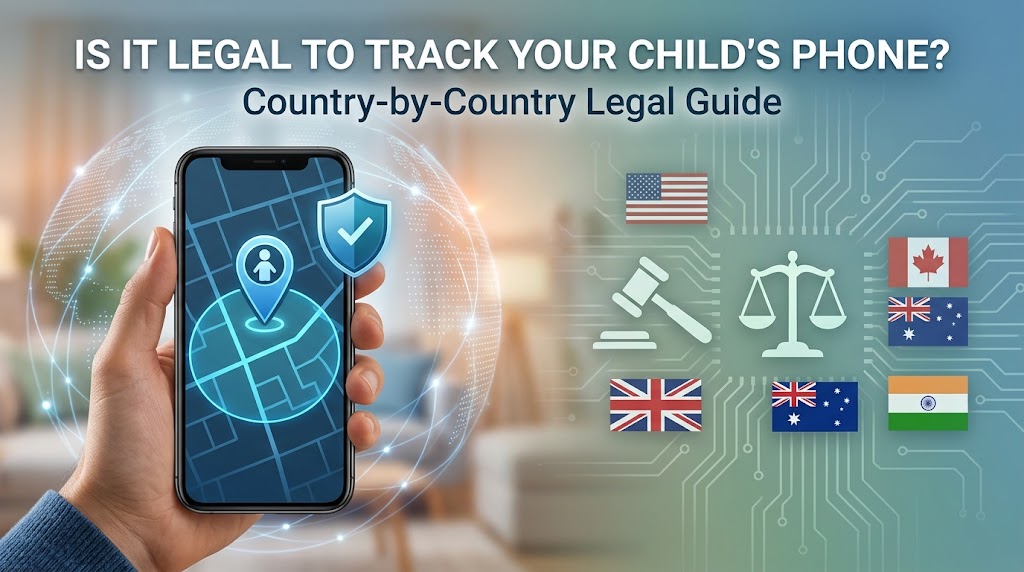
Parents have a narrower but real exception. Recording calls on a device you own and provide to your minor child generally falls under your authority as a parent — many courts recognize “vicarious consent” where a parent reasonably believes recording is in the child’s best interest. It’s not unlimited, and the safest practice is the same one we recommend for all monitoring: do it openly, on a phone you own, and tell your child. If you’re setting this up, our call recorder is built for lawful, consent-based use, and our broader guide on how to monitor your child’s calls and SMS covers the full setup.
Best practice in one line
When you’re not certain, announce the recording and get a clear “yes.” It’s free, it’s instant, and it turns a legal gray area into a settled one.
Frequently asked questions
How many states require all-party consent?
As of 2026, twelve states require all-party (often called two-party) consent: California, Connecticut, Delaware, Florida, Illinois, Maryland, Massachusetts, Montana, New Hampshire, Oregon, Pennsylvania, and Washington. The other 38 states and D.C. follow one-party consent.
Can I record a call if I’m one of the people on it?
In one-party states and under federal law, yes — your own consent is enough. In all-party states, everyone on the call must agree, even if you’re a participant.
Which law applies to an interstate call?
Multiple states’ laws can apply. The conservative, safe approach is to follow the strictest applicable rule and get all-party consent whenever someone may be in an all-party state.
Can a parent record a child’s calls?
Often yes, under a parent’s authority and “vicarious consent,” on a device the parent owns and provides to a minor. The safest approach is to record openly and tell the child rather than rely on the exception.
Lawful use only: record and monitor only your own calls, a minor child’s device you own as a parent or legal guardian, or a device you own with proper consent. This article is general information, not legal advice — check your local laws.