A phone that’s powered off or dead is the hardest case — no live GPS, no internet, no signal to chase. But “hard” isn’t “hopeless.” Between your phone’s last known location, Google’s offline finding network, and a few newer tricks in 2026, you usually have more to work with than a blank map. Here’s exactly what’s possible and what isn’t.
Can you find a phone that’s turned off?
You can’t see a live location of a fully powered-off phone, but you can see its last known location from when it was last online, and Google Find Hub can often locate offline phones through nearby Android devices. Some newer phones even keep responding for hours after the battery dies.
Let’s unpack what’s realistically recoverable.
Start with the last known location
The moment a phone loses power or signal, it stops reporting live — but the last position it sent while still on stays saved. To see it:
- From any browser, go to google.com/android/find.
- Sign in with the Google account on the missing phone.
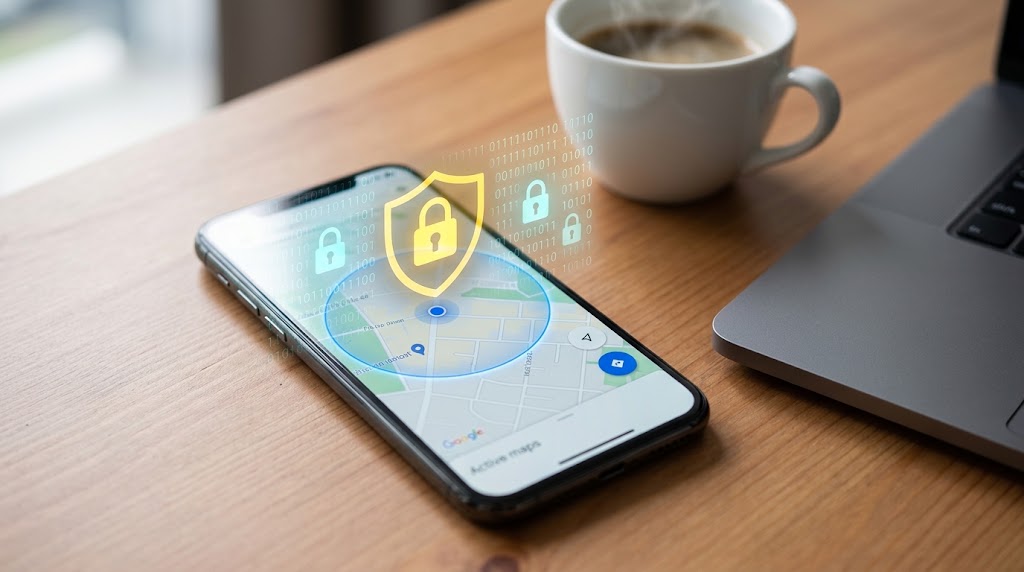
- Read the map. If the phone is off, you’ll see where it was last seen, with a timestamp.
Write that location and time down immediately. Even a 20-minute-old fix tells you which building, street, or neighborhood to focus on — and it’s the single most useful clue for an off phone.
Why a powered-off phone limits tracking
It helps to understand the physics so you know when to stop refreshing. Location tracking needs the phone to do something: read GPS satellites, connect to Wi-Fi or cell towers, and send that data out. A fully powered-off phone does none of this — there’s no signal to triangulate and nothing transmitting. That’s why no app or service can show a live position for a phone that’s genuinely off. The “last known location” is the best the network has, because it’s the last moment the phone was actually talking.
How Find Hub’s offline finding can still help
Here’s where 2026 is better than a few years ago. Google’s offline finding network lets a phone be located even without its own internet connection by relaying anonymously and encrypted through other nearby Android devices that pass within Bluetooth range. According to Google’s Find Hub support, this works best when, before the phone went dark, you had:
- Find Hub turned on with offline/network finding enabled, and
- Bluetooth and Location left on, since the relay leans on them.
So a phone that’s switched off in a busy area may still ping the network as people walk past — surfacing a fresher location than the last fix. A newer detail worth knowing: select recent premium phones include a low-power chip that keeps responding to the network for several hours after the battery dies, which can buy you an extra window even on a “dead” phone. Older and most mid-range phones go silent the instant they power down.
When the map goes cold: call your carrier
If offline finding turns up nothing and you only have a last-seen spot, your carrier is the next move — especially for a stolen phone. Ask them to:
- Suspend the SIM so it can’t be used while the phone is missing.
- Blacklist the IMEI so the device can’t connect to networks even with a new SIM.
- Note the last network activity; carriers can sometimes confirm the last tower the phone connected to, which corroborates your last-known map fix.
For anything stolen, file a police report with the IMEI as well. Carriers release detailed location data only to law enforcement, so the police report is what unlocks that path.
Set this up before you ever need it
Offline finding only helps if it was switched on beforehand. Take two minutes now on every phone in your household:
- Settings → Google → Find My Device / Find Hub — confirm it’s on.
- Enable offline / network finding so the phone can be located without data.
- Leave Bluetooth and Location on for the relay to work.
- Save your IMEI (dial *#06#) somewhere safe today.
For families, a dedicated tool means you’re never starting from a blank map. SpyHuman’s location tracker keeps a continuous movement history on a device you own or your minor child’s phone, so even if it later goes dark you already have a clear trail and a reliable last position — and the mobile tracker ties that to the device’s wider activity. The last location logged before a phone died is far more useful when it sits inside a full timeline.
Frequently asked questions
Can I find my phone if it’s switched off?
Not as a live location — a powered-off phone transmits nothing. But you can see its last known location from when it was last online, and Find Hub can sometimes locate it through nearby Android devices using offline finding if that was enabled beforehand.
Can a dead-battery phone still be tracked?
Mostly no — once the battery is fully dead, the phone stops responding. The exception is some newer premium phones with a low-power chip that keeps answering the finding network for a few hours after the battery dies.
How does Find Hub locate an offline phone?
It relays the phone’s encrypted location through other nearby Android devices that pass within Bluetooth range, then surfaces that to you. It needs offline finding, Bluetooth, and Location to have been enabled before the phone went offline.
What if there’s no last known location at all?
Then Find Hub never got a fix — usually because the phone was off or offline for a long time, or finding wasn’t enabled. Contact your carrier to suspend the SIM and block the IMEI, and file a police report if it was stolen.
Lawful use only: monitor devices you own, your minor child’s device as a parent/guardian, or a company device with the user’s consent.