Short answer: whether can someone track my phone with my number is possible depends on the method — and this guide breaks down exactly what’s real and what’s myth. You hand your number to a delivery driver, a new contact, a website checkout. Then the worry creeps in: could a stranger take that number and watch where you go? It’s one of the most common privacy questions people ask, and the answer has been twisted by years of ads promising to “locate any number instantly.” Here’s what’s actually true in 2026.

Can someone track my phone with my number? The short answer
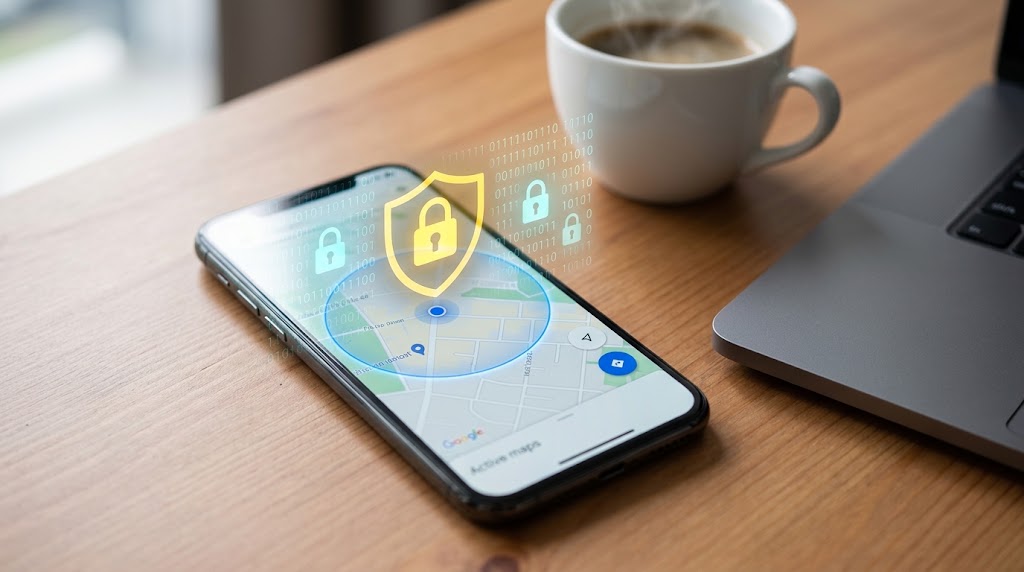
No — an ordinary person can’t pull up your live, street-level location using only your phone number. A number on its own reveals very little beyond the carrier and rough region it’s registered to. Real-time tracking needs something more: account access, spyware on the device, or your own consent to share location.
That’s the headline. But “your number can’t do it alone” is not the same as “you can never be tracked,” so it’s worth understanding where the real risk lives.
What a phone number alone can reveal
A standalone number is mostly an identifier, not a tracking beacon. From it, public and commercial lookup tools can usually find:
- The carrier the number belongs to (and whether it’s a mobile, landline, or VoIP line).
- The registration region — typically the country, state, or city tied to the area code or prefix.
- Whether the number has been reported as spam by other users.
That’s genuinely useful for screening unknown callers or spotting a scam. It’s useless for finding a person on a map. None of it tells anyone which building you’re standing in right now.
What a number alone can’t do
It can’t open your live GPS feed. The satellites and sensors that produce a precise location live inside the phone, and that data flows to your Google account, your apps, and (with a warrant) your carrier — not to whoever happens to know your digits. Privacy laws like the EU’s GDPR and the US CCPA make unrestricted location lookup of a private individual illegal, which is why no legitimate service offers it.
Carriers can estimate position through cell-tower triangulation, but they don’t sell that to the public, and the accuracy is rough — roughly half a kilometre to a kilometre and a half in built-up areas. Law enforcement can request it through a legal process. A random website cannot.
So how does real phone tracking actually happen?
Tracking that works almost always comes back to one of these, and notice that none of them rely on the number by itself:
- You’re signed into your own cloud account. Google Find Hub or Apple’s Find My can locate a device tied to an account you control.
- Someone agreed to share. Live location in Google Maps or WhatsApp is accurate and legal — because the other person turned it on.
- A monitoring app is installed. A consent-based parental or device-management app on a phone you own reports its location to your dashboard.
- Spyware was secretly installed. This is the genuinely dangerous one, and it requires physical or account access to the phone — not your number.
The thread running through all four: tracking happens through what the number is connected to (an account, an app, a device), not the number string itself. Security guidance from Norton makes the same point — the real exposure is the accounts and apps linked to your line.
Where the number does become a weak point
There’s one indirect route worth naming. Because so many accounts use SMS for password resets and two-factor codes, your number can be a doorway. In a SIM-swap attack, a criminal convinces your carrier to move your number to their SIM, then intercepts those codes and breaks into your accounts — including ones that hold location data. The number didn’t track you; it was used to hijack the accounts that can.
So, can someone track my phone with my number remotely? In nearly every realistic scenario, the honest answer is no — not without installing software on your device or gaining access to one of your accounts.
How to protect yourself
A few practical moves shut down most of the realistic risk:
- Set a carrier PIN or port-out lock. Nearly every major carrier offers one, and it’s the single best defence against SIM-swap fraud. The FCC’s mobile device guide walks through securing your line.
- Move two-factor codes off SMS. Use an authenticator app or a passkey where you can.
- Audit your location-sharing. Open Google Maps and your social apps and confirm you’re only sharing with people you trust.
- Check the phone itself. If you suspect spyware, review installed apps and app permissions, and factory-reset if something looks off. Spyware needs access to the device, so unexplained apps are the red flag.
If your goal is the opposite — you want a reliable way to see a device’s location for safety reasons — do it the lawful way. SpyHuman’s location tracker shows continuous, accurate location for a device you own or your minor child’s phone you supervise, and the phone number tracker page explains exactly what a number can and can’t reveal, with no false promises.
The bottom line on whether can someone track my phone with my number: a number alone is not a tracking tool, but pairing it with phishing, account takeovers, or installed spyware is where genuine risk begins.
Frequently asked questions
Can someone find my exact location with just my phone number?
No. A number alone reveals the carrier and general region, not a live GPS position. Precise tracking requires account access, an installed app, or your consent to share location — none of which a number provides on its own.
Can my mobile carrier track my phone?
Yes, carriers can estimate location through cell towers, but they don’t share it publicly. They release it to law enforcement with a warrant, and the accuracy is approximate rather than pinpoint.
Is it dangerous to give out my phone number?
For most situations, no. The main risk is SIM-swap fraud, where your number is used to hijack accounts. Setting a carrier PIN and avoiding SMS-based two-factor codes removes most of that exposure.
How do I know if my phone is being tracked?
Watch for unfamiliar apps, fast battery drain, unexpected data use, or location-sharing you didn’t enable. Review app permissions and your Google or Apple account’s connected devices, and reset the phone if you find something suspicious.
Lawful use only: monitor devices you own, your minor child’s device as a parent/guardian, or a company device with the user’s consent.