Cyberbullying rarely announces itself. There’s no bruise, no note home from school. It happens inside group chats, comment sections, and disappearing messages your child can close the second you walk in. That’s what makes it so hard to catch, and why knowing the quieter signals matters so much.
Here are nine warning signs worth paying attention to, and a calm plan for what to do if you spot them.
1. They get anxious or upset after using their phone
Watch the after, not just the during. A child who seems fine, checks a notification, and suddenly goes quiet or irritable is telling you something without words.
2. Sudden secrecy around screens
Quickly switching apps, flipping the phone face-down, or closing the laptop when you come near is one of the most consistent red flags. Some secrecy is normal for teens; a sharp new change is worth noticing.
3. Pulling away from friends or activities they used to love
Cyberbullying often spills into real life. Dropping a sport, skipping a friend group, or making excuses to stay home can signal that something online has made those spaces feel unsafe.
4. Trouble sleeping, or using the phone at all hours
Late-night device use paired with tiredness and mood changes can mean they’re either bracing for messages or unable to step away from them.
5. Changes in appetite, mood, or grades
Persistent sadness, anger that seems out of proportion, or a slipping report card are classic stress responses. They aren’t proof of bullying on their own, but combined with the signals above they add up.
6. They suddenly “lose” interest in their phone
The opposite extreme is also telling. A child who normally lives on their phone and abruptly avoids it may be trying to escape something happening there.
7. Deleting accounts or creating new ones
Wiping a profile, going private overnight, or spinning up a second “finsta” can be an attempt to dodge a bully — or to hide the fallout.
8. Vague comments about people being “mean” online
Throwaway lines like “everyone’s so annoying” or “I hate that group chat” are often a test. They’re checking whether it’s safe to tell you more.
9. Unexplained physical complaints
Headaches and stomachaches with no medical cause frequently show up when kids are under sustained social stress.
What to do if you notice these signs
Stay calm and open the door, gently. Lead with curiosity, not interrogation: “You seemed off after that message — want to talk about it?” Reacting with panic or threats to take the phone away often makes kids clam up, because losing the phone feels like losing their social world.
Don’t delete anything. If there is bullying, screenshots and messages are evidence. Save them with dates before anything disappears.
Report and block. Most platforms let you report harassment and block accounts. Schools often have anti-bullying policies too; document and escalate.
Get support. StopBullying.gov and the Cyberbullying Research Center have practical, parent-tested guidance.
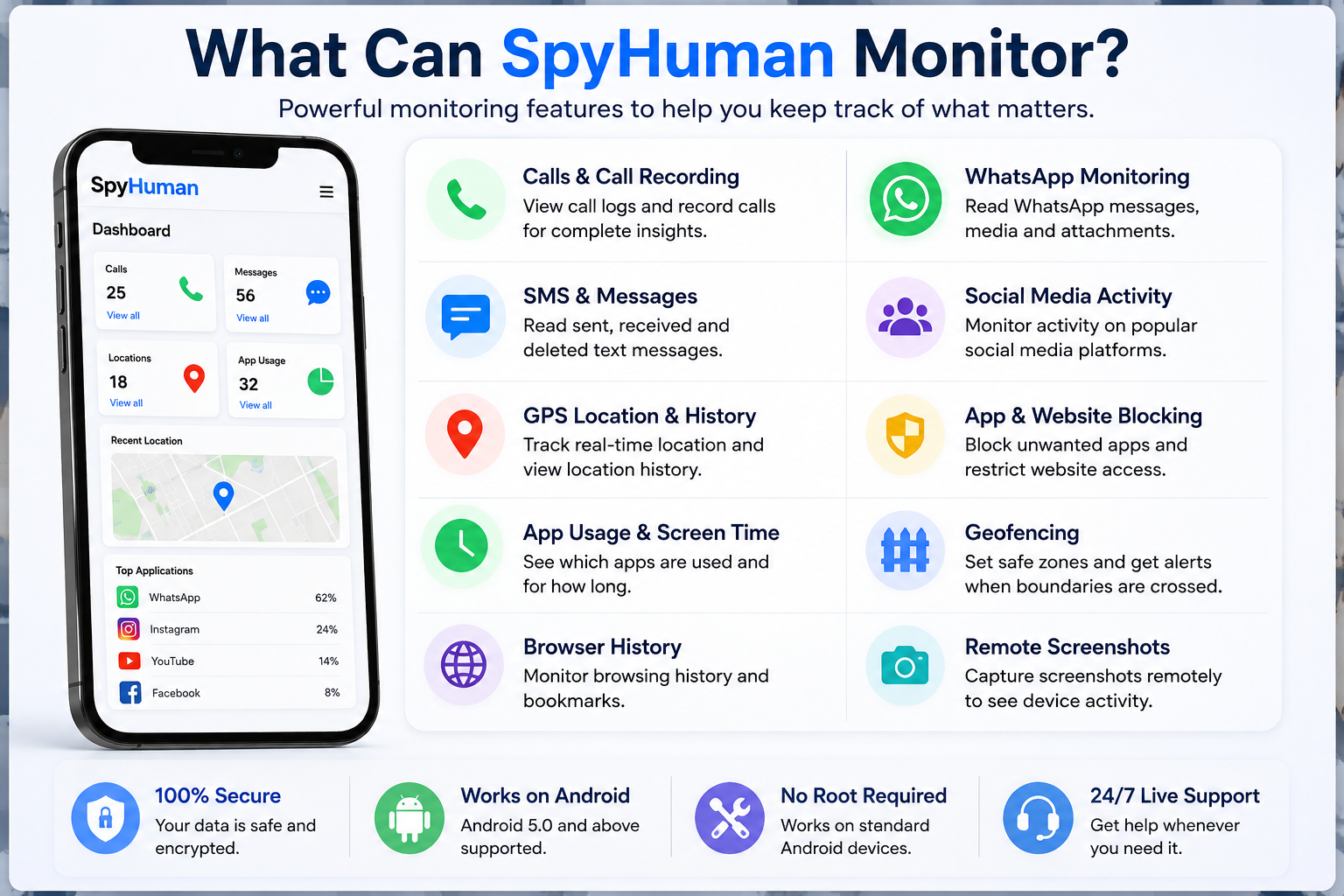
Build quiet awareness, with consent. For younger children especially, monitoring tools can surface harmful messages early — before a child feels able to speak up. The healthiest approach is transparent: tell your child what you’ve set up and why. SpyHuman’s social media monitoring can flag concerning conversations across the apps kids actually use, and the full feature set covers messages, browsing, and screen time in one dashboard. Frame it as a seatbelt, not a spy camera.
The goal isn’t to catch your child out. It’s to notice sooner, so they never feel like they’re facing it alone.
Frequently asked questions
What’s the most common sign of cyberbullying?
A noticeable mood change tied to device use — anxiety, anger, or withdrawal right after going online — is the single most reported early signal.
Should I take my child’s phone away if they’re being bullied?
Usually no. Removing the phone can feel like punishment and discourages them from confiding in you. Focus on support, reporting, and blocking instead.
Can monitoring apps detect cyberbullying?
Yes — tools that scan messages and social apps can flag harmful keywords and conversations early. Used transparently, with your child’s knowledge, they’re a safety net rather than surveillance.
Lawful use only: monitor your own minor child’s device as a parent or legal guardian.