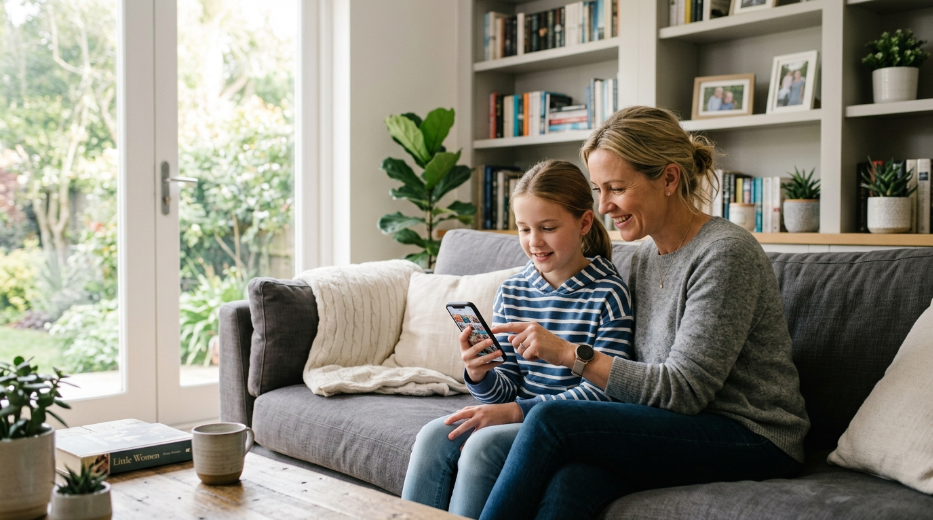
Most parents who want to monitor their kid’s phone are scared of two things at once: what might be happening online, and what checking will do to the relationship. Both fears are valid. The good news is that the way you monitor matters far more than whether you do. Done in secret, monitoring teaches a child that they’re suspected and watched. Done openly, it becomes one more normal family rule — like seatbelts or a curfew — and can actually make hard conversations easier.
Here’s how to keep your child safe without turning your home into a surveillance state.
Why transparency beats secret monitoring
The single most important rule: tell your child you’re monitoring, and why.
Child development experts are nearly unanimous on this. As psychologist Dr. Michael Thompson puts it, “Secret monitoring creates a relationship based on suspicion rather than trust. Kids who discover hidden monitoring often feel betrayed and become more secretive.” Research from the University of Oxford found that teens who feel tracked often feel spied on rather than protected — which damages communication and pushes them to hide more, not less.
Transparency flips the dynamic. When your child knows the rules, monitoring stops being a trap and becomes a shared agreement. The organization Children and Screens frames the healthiest approach as a family media plan built together, where controls and conversations work as a pair rather than controls replacing them (Children and Screens). The goal is guidance, not a hidden camera.
How to have the conversation
Treat this like introducing any other safety rule, calmly and ahead of time — not as a reaction to something you found.
Try something close to: “Phones connect you to a lot of great stuff and some genuinely unsafe stuff. While you’re learning to handle it, I’m going to keep an eye on a few things, and I’ll always tell you what. As you show me you’ve got it, we ease off.” Then be specific about what you’ll see and what you won’t.
A few principles that keep trust intact:
- Be honest about what’s monitored. Vague threats breed more anxiety than clear rules.
- Frame it as temporary and earned. Monitoring should shrink as your child grows, not stay fixed forever.
- Let them see their own data where you can. When a child can view their own usage reports, it feels like co-piloting, not spying.
- Stay open to pushback. A teen who can argue for more privacy and sometimes win is a teen who trusts the system.
What to monitor — and what to leave alone
More data is not better. Watch for safety, not for control over every detail of your child’s social life.
| Worth monitoring | Usually leave alone |
|---|---|
| Contact from unknown adults / strangers | Private chats with close, known friends |
| Location for safety (and arrival alerts) | Constant real-time tracking of every move |
| Explicit content, grooming, or sextortion signals | Normal teen slang, crushes, and venting |
| New apps and who can message your child | Reading every single message for its own sake |
| Signs of cyberbullying or self-harm | Harmless memes and group-chat noise |
The line is simple: monitor the things that signal real danger, and resist the urge to surveil ordinary growing up. Kids can tell the difference, and so can you.
Age-appropriate monitoring, step by step
What’s reasonable for an 8-year-old is overbearing for a 16-year-old. Scale it to age and maturity.
Ages 6–9: Tight controls are appropriate. Curate apps, keep devices in shared spaces, use kid-safe content filters, and full visibility into messaging is fair. Almost everything is supervised.
Ages 10–12: Loosen slightly. Keep content filters and app approval, monitor for strangers and risky contact, set screen-time limits, and start explaining why each rule exists so they internalize it.
Ages 13–15: Shift from control toward coaching. Keep safety monitoring (strangers, explicit content, location for logistics) but back off from reading every private exchange. Negotiate rules together.
Ages 16–17: Mostly trust, with a safety floor. Many teens can self-manage; keep location sharing for coordination and an open door for problems, but heavy monitoring at this age usually backfires.
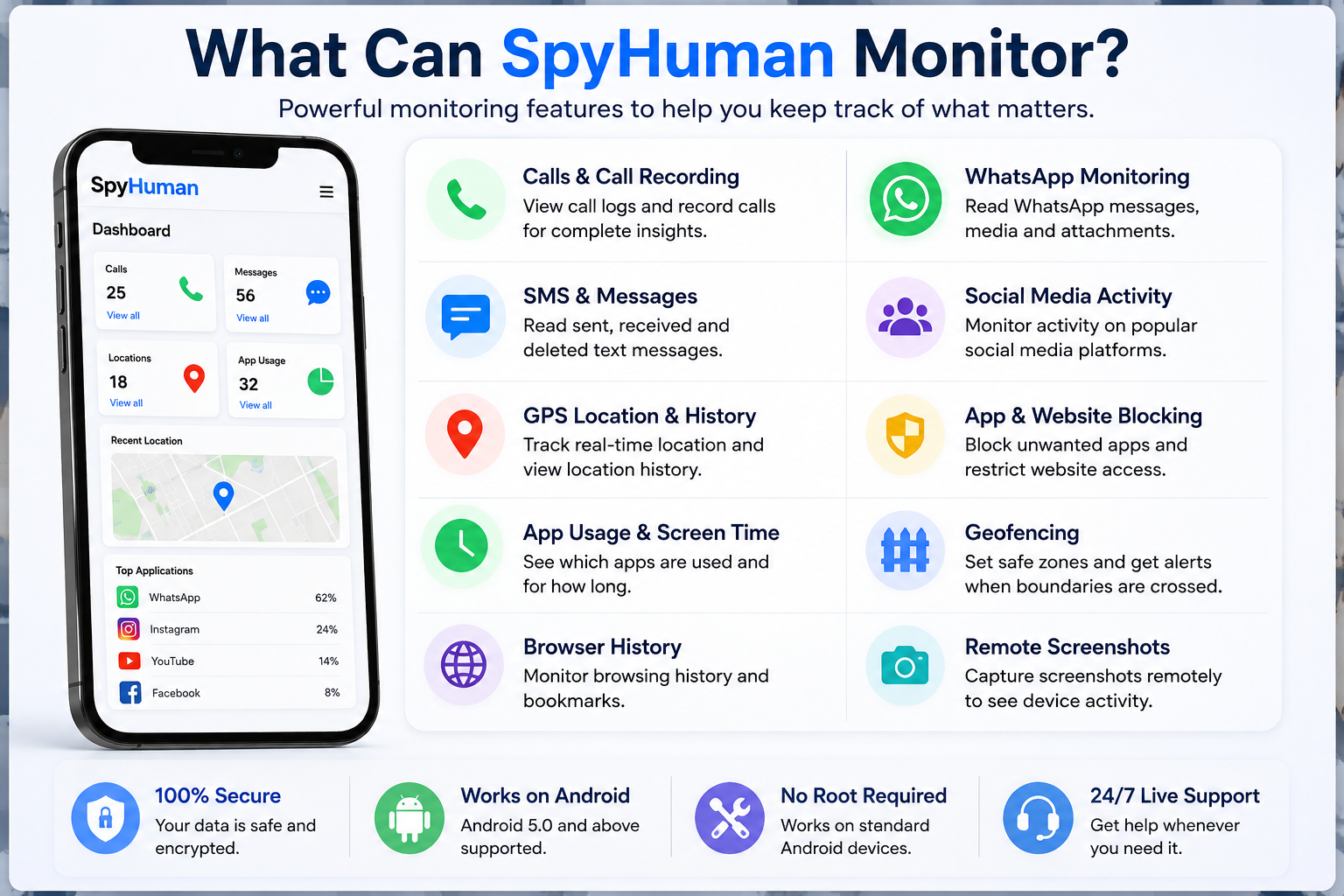
A tool that consolidates this in one place helps you watch what matters without juggling five apps. SpyHuman’s full feature set covers messages, social apps, browsing, location, and screen time from a single dashboard, and you can dial features up or down by child and age. See the plans and pricing to match the level of monitoring to what your family actually needs. For location specifically, our walkthrough on how to track your child’s phone location on Android shows the gentlest setup.
Loosening the reins over time
Monitoring should have an expiration date that moves with maturity. Set checkpoints — a birthday, the start of a school year — to review the rules together and hand back privacy your child has earned. Tell them in advance that good judgment buys more freedom. That promise is what makes the whole arrangement feel fair instead of punitive, and it’s the part most parents forget. The end goal isn’t a permanently watched teenager; it’s a young adult who knows how to keep themselves safe.
Frequently asked questions
Should I tell my child I’m monitoring their phone?
Yes. Experts strongly favor transparent monitoring. Secret monitoring, once discovered, damages trust and makes kids more secretive. Telling them what you watch and why turns it into a shared safety rule instead of a betrayal.
At what age should I stop monitoring my child’s phone?
There’s no fixed age. Reduce monitoring gradually as your child shows good judgment, keeping only a safety floor (like location for coordination) through the mid-to-late teens. Heavy monitoring of a 16- or 17-year-old usually backfires.
Is monitoring my child’s phone legal?
In most places a parent or legal guardian may monitor a minor child’s device they own or provide. The healthiest and safest approach is also transparent — your child knows about it. Laws vary, so confirm the rules where you live.
Will monitoring damage my relationship with my teen?
Not if it’s transparent, proportionate, and eases off over time. The harm comes from secret, excessive surveillance. Clear rules, respect for ordinary privacy, and earned freedom keep trust intact.
Lawful use only: monitor your own minor child’s device as a parent or legal guardian.