It’s the question almost every parent asks, usually right after a battle over the tablet: how much screen time is actually okay? The honest answer is that it’s less about a magic number of minutes and more about what’s on the screen, when, and whether it’s crowding out sleep, movement, and real-world time. Still, guidelines help — so here’s where the experts land in 2026, and how to make limits that actually hold.
The age-by-age guidelines
Pediatric guidance has shifted from hard time caps toward quality and balance, but the rough benchmarks still look like this:
- Under 18 months: Avoid screens apart from video calls with family.
- 18–24 months: Only high-quality content, watched together. No solo screen time.
- 2–5 years: Around 1 hour a day of high-quality programming, co-viewed where possible.
- 6–12 years: No single magic number. The American Academy of Pediatrics recommends consistent limits that protect sleep, physical activity, and homework — for many families that’s 1–2 hours of recreational screen time on school days.
- Teens: Focus on balance and boundaries rather than a strict cap. The reality check: US teens average close to 5 hours a day on social media alone in 2026, well above what most experts consider healthy.
Why the type of screen time matters more than the total
An hour spent video-calling grandparents or building something in a creative app is not the same as an hour of doom-scrolling. When you assess your child’s screen time, sort it into buckets: creating, connecting, learning, and passive consuming. It’s the passive, algorithm-driven scrolling that’s most strongly linked to sleep problems and low mood.
Warning signs your child is getting too much
- Trouble falling asleep, or a phone in the bedroom overnight
- Meltdowns or anxiety when screens are taken away
- Slipping grades or dropped hobbies
- Less interest in friends, family meals, or going outside
- Headaches, eye strain, or constant fatigue
One or two off days are normal. A persistent cluster of these is the signal to recalibrate.
How to set limits that actually stick
Make rules about context, not just minutes. “No phones at meals or after 9 p.m.” is easier to enforce than a daily timer, and it protects the things that matter most — connection and sleep.
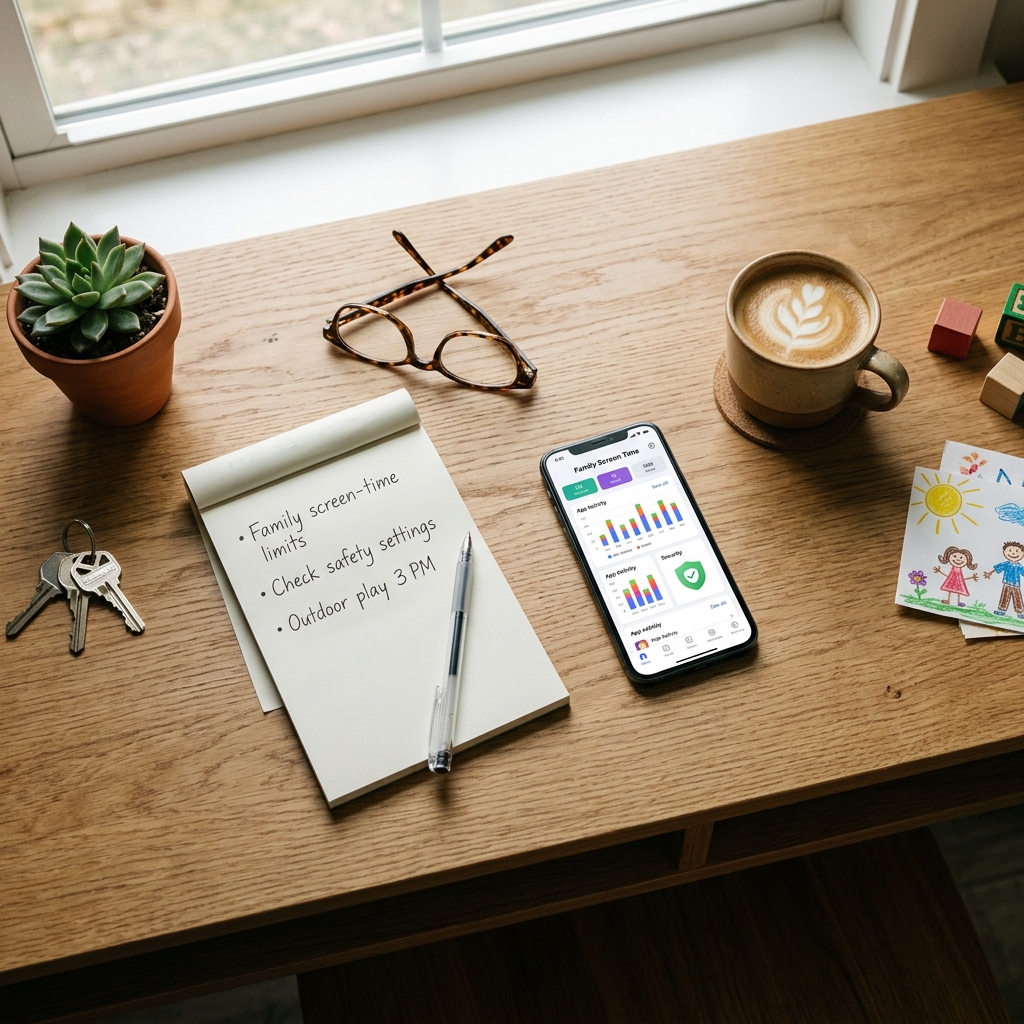
Use the built-in tools. Google Family Link and Apple Screen Time let you set daily limits, app-specific caps, and a device bedtime. They do the enforcing so you’re not the timer police.
Model it. Kids notice when the rules only apply to them. Device-free zones that include parents land far better.
Revisit every term. As kids show responsibility, loosen the reins and say why. Limits that grow with them feel fair instead of punitive.
For families who want more than time limits — app-usage breakdowns, browsing visibility, and location together in one place — a monitoring tool can fill the gaps the default controls leave. SpyHuman’s full feature set covers app usage, web activity, and screen-time patterns so you can base limits on what’s actually happening, not guesswork. Used openly, with your child in the loop, it’s a way to coach healthier habits rather than just police them.
The bottom line
There’s no universal number. Aim for screen time that leaves room for sleep, movement, schoolwork, and face-to-face time — and watch the kind of use as closely as the amount. Get those right and the minutes mostly take care of themselves.
Frequently asked questions
How much screen time is okay for a 10-year-old?
Most experts suggest 1–2 hours of recreational screen time on school days, with consistent limits that protect sleep, activity, and homework. Quality of content matters as much as the total.
Is screen time before bed really that bad?
Yes. Screens in the hour before sleep are linked to trouble falling asleep and poorer sleep quality. A device bedtime and keeping phones out of the bedroom help a lot.
What’s the best way to limit screen time without constant fights?
Set context-based rules (no screens at meals or after a set time), use built-in tools to automate limits, and model the same habits yourself.
Lawful use only: monitor your own minor child’s device as a parent or legal guardian.